

Why Do Some Rollator Walkers Cost More Than Others?
Jan 26, 2026
If you’ve ever shopped for a rollator walker with seat, you might have noticed something confusing: two models that look similar could have wildly different prices. One might cost a couple hundred dollars, while another goes for three or four times that. So what’s the difference? Why do some rollators cost more than others? Let’s unpack it.
Material Matters: Frame and Weight
One of the biggest factors affecting price is the material of the frame.
• Aluminum – Lightweight, rust-resistant, and easy to lift. Most mid-range rollators are made from aluminum.

Elenker Aluminum Lightweight Rollators (HFK-9240-2)
• Steel – Stronger and sturdier, but heavier and harder to carry. Usually less expensive than premium materials, but can feel bulky.
• Carbon Fiber – Super light and incredibly strong, but very expensive. Rollators with carbon fiber frames are usually top-of-the-line.
Basically, the lighter and stronger the material, the higher the cost. You’re paying for durability and ease of use.
Wheels and Maneuverability
Another key factor is the wheels. How many wheels a rollator has, their size and quality make a difference:
• Three-wheel rollators – Easier to turn and maneuver indoors, generally cheaper.
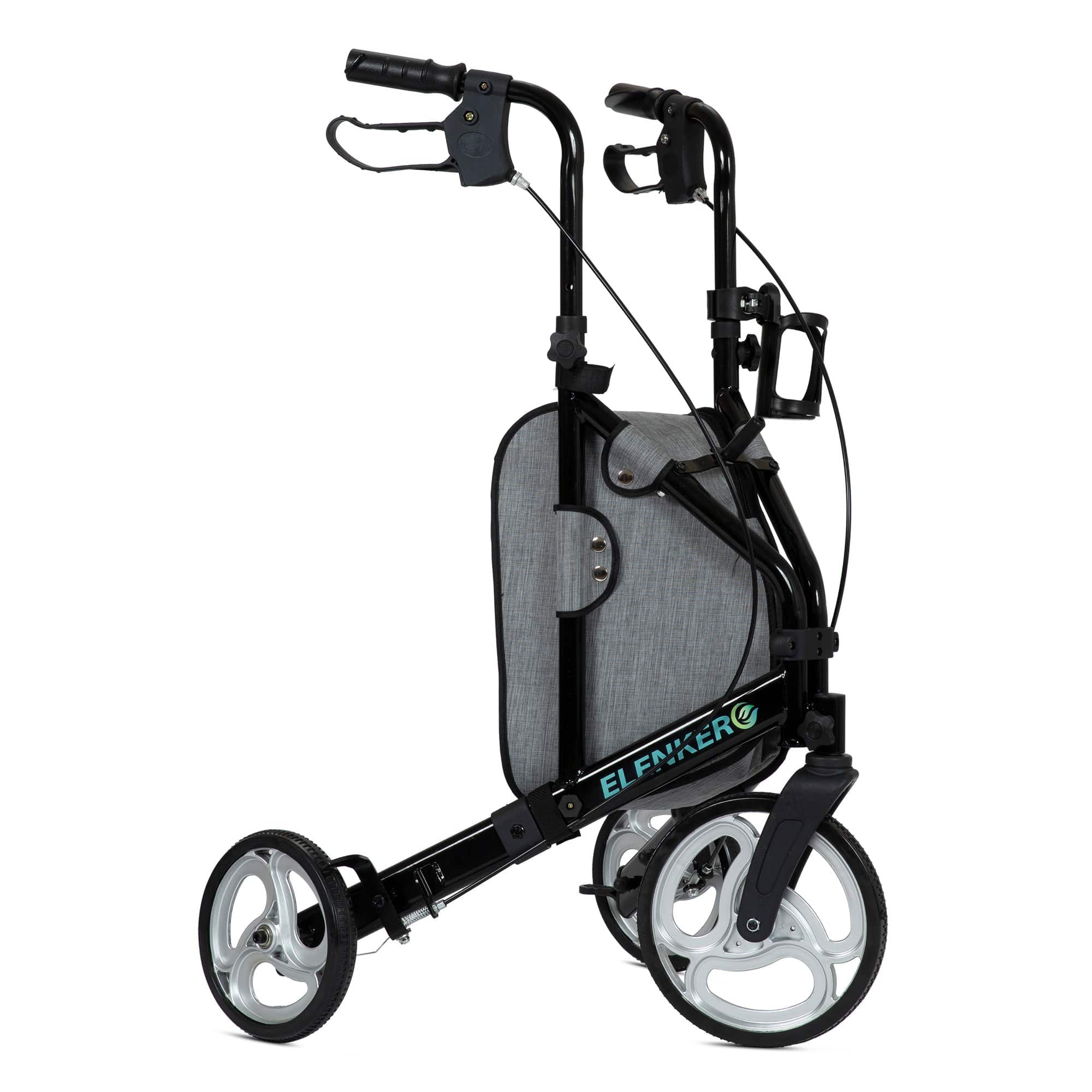
Elenker 3 Wheel Rollator
• Four-wheel rollators – Offer more stability, especially for outdoor use, often a bit more expensive.

Elenker 4 Wheel Upright Rollator
Then there’s the quality of the tires themselves. Large, rugged wheels for outdoor terrain cost more than small indoor wheels. Smooth-rolling, puncture-resistant tires add to the price too.
Brakes: Basic vs Advanced
Not all brakes are created equal.
• Basic push-down brakes – You push down to stop. Simple, standard, and less expensive.
• Locking or ergonomic brakes – Designed to be easier to use and safer, often with handles shaped for comfort. These cost more because of the added convenience and safety.

Ergonomic dual brakes: (1) squeeze to slow down and (2) press down to lock the wheels
Better brakes might seem like a small feature, but for people who rely on their rollator daily, they make a huge difference.
Seating and Comfort
Many rollators come with a seat, but not all seats are the same:
• Basic seats – Simple and functional, cheaper.
• Padded or wider seats – Much more comfortable, especially if you plan to sit frequently.
• Backrests or foldable seats – Extra support and convenience, which increases the price.
Comfort matters, especially for older users or anyone using the rollator for long periods. Higher-end models usually focus heavily on seating comfort.

Adjustability and Portability
Adjustable features also affect cost:
• Height-adjustable handles – Let you customize the rollator for your height, improving posture and reducing strain.
• Folding frames – Essential for storage and transport, adds convenience but can increase the price.
If you plan to travel with your rollator or store it in a car, these features are worth paying for.

Adjustable frame and easy folding
Extra Features
Some rollators go beyond the basics with added features:
• Built-in baskets or storage pouches
• Cup holders or trays
• Reflective strips for safety
• Specialized tires for rough terrain
Each extra feature adds to the cost. While not essential, these can make everyday use easier and more enjoyable.
Brand and Warranty
Brand reputation matters too. Trusted brands that are known for durability, quality materials, and design often charge more.
Warranties also factor in: a rollator with a longer or more comprehensive warranty typically costs more upfront but gives you peace of mind. You’re paying for reliability.
How to Compare Value
Here’s a quick side-by-side look at what you’re paying for when comparing budget vs premium rollators:
| Feature | Budget Rollators | Premium Rollators |
|---|---|---|
| Frame Material | Steel or basic aluminum | Lightweight aluminum or carbon fiber |
| Wheels | Standard indoor wheels | Large, durable, outdoor-ready wheels |
| Brakes | Basic push-down | Locking or ergonomic handles |
| Seat | Basic, narrow | Padded, wide, possibly with backrest |
| Adjustability | Limited | Height-adjustable handles, foldable frame |
| Extra Features | Minimal | Storage, cup holders, reflectors, rugged tires |
| Brand/Warranty | Lesser-known brand, short warranty | Trusted brand, long warranty |
The bottom line is that some rollator walkers cost more because they’re built with better materials, designed for comfort, packed with features and come from reputable brands. Others are simpler and more affordable, but may not last as long or be as comfortable.
When shopping, think about your lifestyle: do you need something lightweight for travel? Comfortable for frequent use? Durable enough for outdoors? The answers help justify the price difference.
Remember, the most expensive rollator isn’t always the best for everyone, and the cheapest one might not meet your needs. Price reflects convenience, durability, comfort, and safety.
Rollators are an investment in mobility, independence, and daily comfort. Understanding what drives price differences can help you make a choice you’ll be happy with every day.


