

Are Upright Rollators More Ergonomic Than Regular Rollator Walkers?
Jan 28, 2026
If you’ve been looking into mobility aids, you’ve probably noticed there are all kinds of rollators out there. Two of the main types that get a lot of attention are upright rollator walkers and regular rollator walkers. People often wonder: which one’s easier on the body? Which keeps your back and shoulders happy while you’re on the move? Let’s find out why upright rollators might have the edge when it comes to ergonomics.
Walking Comfort Starts With Posture
One of the biggest things that makes upright rollators stand out is how they influence your posture. Traditional rollator walkers usually have handles positioned a bit lower. That’s fine if you’re sitting on the built-in seat every so often, but if you’re walking for longer stretches, it can make you lean forward more than your body wants to. That leaning puts extra strain on your lower back, shoulders and wrists.

Elenker Rollator Walker (HFK-9210KDB)
Upright rollators, on the other hand, encourage a more natural stance. Handles are higher and often adjustable, so your elbows stay slightly bent while you push. This keeps your spine in better alignment and spreads the effort more evenly across your arms and shoulders. Less bending forward, less hunching — more comfortable walking.

Elenker upright rollator walker (HFK-9240-2)
Handles That Work With You, Not Against You
The little things matter. Upright rollators often have ergonomically shaped hand grips, which can feel more natural in your hands. Standard rollators usually have straight, simple handles. They work, sure, but they can sometimes leave your hands feeling tired or sore after a while.
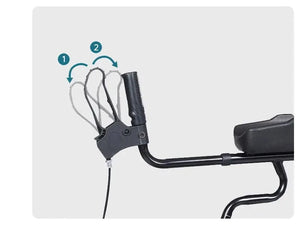
Upright rollators have ergonomically shaped hand grips
Think of it like holding a coffee mug all day. A handle that fits your hand makes everything easier. When your rollator handles are comfortable and at the right height, your body doesn’t have to overcompensate and your joints stay happier.
Weight Distribution Matters
Another perk of upright designs is how the weight is distributed. When you push a rollator that’s positioned upright, the force comes from closer to your center of gravity. That means your wrists and forearms don’t have to work overtime, which can make a noticeable difference if you’re walking longer distances.

The force comes from closer to your center of gravity with upright walker
With a regular rollator, a lot of that push force lands lower, which can make your arms tire faster and create a bit more pressure on your back. Not terrible for short walks, but for extended use, it can add up.

Your arms might tire faster and create a bit more pressure on your back if you use incorrect posture.
Flexibility and Fit Are Key
Even the most ergonomic rollator isn’t perfect if it doesn’t fit your body. Handle height is crucial. Ideally, your hands should rest naturally at wrist level with a slight bend in the elbows. Too low or too high, and you could end up back where you started — straining muscles and joints.
Many upright rollators come with adjustable handles for exactly this reason. That small tweak can make a big difference in comfort and mobility.

Elenker MT-8151 upright walker with adjustable frame
When Regular Rollators Still Make Sense
Now, don’t get me wrong. Regular rollators have their place. They’re often lighter, sometimes more compact, and the built-in seat is super handy if you need to take a rest. If your walking is shorter or you mostly need the rollator for sitting support, a standard rollator can work just fine.
But if you find yourself walking for longer periods, feeling that forward lean, or noticing tension in your back or shoulders, an upright rollator can be a better fit.

A compact foldable upright walker works well for long-distance walking
Real-Life Benefits
People who switch to upright rollators often report:
• Less back pain while walking
• Fewer wrist and shoulder aches
• Feeling more stable and confident
• A more natural, relaxed gait
It’s not just comfort — it’s about being able to move more freely and enjoy your walks without thinking about posture or discomfort every few steps.
Making the Right Choice
Anyway it’s about matching the rollator to your body and lifestyle. Upright rollators shine when it comes to posture, handle comfort, and reducing strain. Standard rollators have their perks, too, like seating and compact design.
If ergonomics is a top priority, especially for longer walks or back and shoulder comfort, upright rollators usually take the lead. But the real test is how it feels when you use it. Try adjusting the handles, walk around your home, and see which style makes you feel most natural.


