

Who Should Use an Upright Walker Over a Regular Rollator?
Jul 23, 2025
Choosing the right walker can seriously change how comfortable and confident you feel getting around. If you’ve been using a regular rollator and it just doesn’t feel right - or if you're shopping for your first mobility aid - an upright walker might be exactly what you need.
But upright walkers aren’t for everyone. So who actually benefits from using one?
You Struggle with Hunching or Poor Posture
One of the biggest reasons people switch to an upright walker is the posture thing. With a regular rollator, you're often leaning forward, which pulls your shoulders down and puts strain on your back and neck.
Upright walkers are designed to keep you standing taller. The handles are higher and you walk with your arms supported at elbow level, not down by your sides. It feels more natural, especially if you're tired of that slouched-over look (and feel).

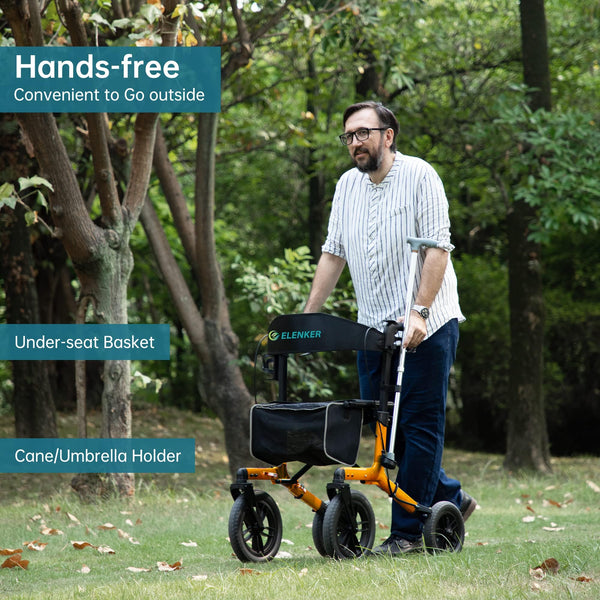
Elenker upright rollator walker keep you standing taller for a better posture
Why it matters:
Standing straighter means less back pain, better breathing and more confidence when you're out and about.
You’ve Got Shoulder, Neck or Back Pain
If your upper body feels sore after a walk with your rollator, it's probably not set up for your body. The lower handles on traditional rollators can lead to all sorts of tension in the wrong places.
Upright walkers offer elbow-level support, which can relieve pressure and make walking way more comfortable.
Why it matters:
Pain shouldn't be part of your daily stroll. An upright walker helps distribute weight evenly and keeps your spine aligned, which can take a load off your neck and shoulders.
You’re Tall and Regular Rollators Feel Too Low
Tall folks, you know the struggle. Even with the handles fully extended, regular rollators can make you feel like you’re folding in half. Not ideal.
Upright walkers usually have higher handlebars and frame options made for taller users, so you're not constantly fighting to keep your balance or squishing yourself down.

Elenker upright walker (HFK-9210KDB-3) is better for taller user
Why it matters:
A walker should fit you—not the other way around. The more natural your walking position, the less effort it takes to move comfortably.
You Feel Wobbly or Off-Balance
If you sometimes feel like your regular rollator isn't quite enough to keep you steady, especially when walking for longer periods, the forearm support on an upright walker might give you that extra confidence boost.
Some people feel like they're going to tip forward with a traditional rollator, especially on slopes or bumpy ground. Upright walkers help shift your weight back, giving you a more grounded center of gravity.
Why it matters:
The more supported and stable you feel, the safer you’ll be when walking indoors or outdoors.
You're Recovering from Surgery or Illness
Maybe you've had hip surgery, a knee replacement, or you're recovering from something that’s thrown off your strength and balance. Upright walkers can be a great rehab companion, especially when you're trying to rebuild posture and stamina.
Why it matters:
Upright walkers offer both support and encouragement to move properly without slouching or overcompensating with bad habits.
You Get Tired Easily When Walking
Walking while hunched over is tiring. It takes more effort and puts stress on muscles that don’t need to be working that hard. Upright walkers help reduce overall fatigue by letting you walk in a more ergonomic, natural stance.
Why it matters:
If you're looking to conserve energy and make your walks longer and more enjoyable, this kind of support can go a long way.
You Want to Feel More Engaged in Your Surroundings
This one’s a little unexpected, but true. Standing upright helps you see better, interact more confidently and feel more part of what's going on around you. It’s easier to make eye contact, navigate crowds, and even window-shop when you're not hunched over.
Why it matters:
Mobility isn’t just about movement—it’s also about how you experience the world. An upright position helps you stay alert and feel more connected.
Who Might Stick with a Regular Rollator?
Upright walkers aren’t the best fit for everyone. Here’s when a traditional rollator might still be the better choice:
(1) You only use it indoors for short distances
(2) You have limited arm strength or shoulder flexibility (some people find the raised armrests tiring)
(3) You need a super compact or lightweight model for tight spaces or travel
(4) You prefer a low-profile design that's easy to fold and carry
In these cases, a regular rollator can do the job just fine—especially if it’s adjusted properly for your height and posture.
So Should You Make the Switch?
If you're nodding your head to the points above - aching shoulders, poor posture, feeling like your rollator doesn’t “fit” - then yeah, it might be time to look into an upright walker.
There’s no one perfect walker for everyone, but upright models have a lot going for them. They’re especially great for people who want more than just mobility—they want comfort, confidence, and a posture boost.
Try one out if you can. Even a short walk around the store or a physical therapy center can help you feel the difference.
Whether you stick with a rollator or go upright, the key is finding what makes you feel steady, supported and comfortable enough to keep moving. Your walker should fit your lifestyle—not frustrate it.
You might be interested in: Elenker's Guide to Choosing Walkers


