

What Makes a Rollator Walker Work: Key Parts and Their Functions
Oct 17, 2025
A rollator walker with seat is more than just a walking aid - it’s a smart, supportive tool designed to make everyday movement easier, safer and more comfortable. Whether you’re recovering from an injury, living with mobility challenges, or simply want extra support while walking, a rollator’s clever design does a lot of heavy lifting for you. But what exactly makes it work so well? Let’s take a closer look at its key parts and how each one contributes to a smooth, safe walking experience.
Key parts and functions of the Elenker upright walker in daily use
The Wheels: Stability Meets Smooth Motion
The most noticeable difference between a standard walker and a rollator walker is the wheels. Instead of lifting the frame with every step, you simply roll it forward—no strain, no awkward lifting.
Most rollators come with three or four wheels, depending on your needs.
(1) Three-wheel models are lightweight and easy to maneuver in tight spaces, perfect for indoors.
(2) Four-wheel models offer greater stability, making them ideal for outdoor use or uneven ground.
Wheel size matters too. Larger wheels (8 inches or more) handle curbs, gravel, or grass better, while smaller wheels are great for smooth indoor flooring. Together, they make walking effortless and natural, giving you confidence whether you’re at home or out for a stroll.

Elenker YF-9007D all-terrain rollator walker 10" wheels
The Brakes: Your Safety Control
A good rollator gives you freedom, but freedom needs control-and that’s where brakes come in. Most rollator walkers feature loop-style hand brakes on the handles. You simply squeeze them to slow down or stop, much like a bicycle.
There are two types of braking functions:
(1) Regular braking: squeeze to slow or stop while moving.
(2) Parking brake: push down to lock the wheels when sitting or standing still.
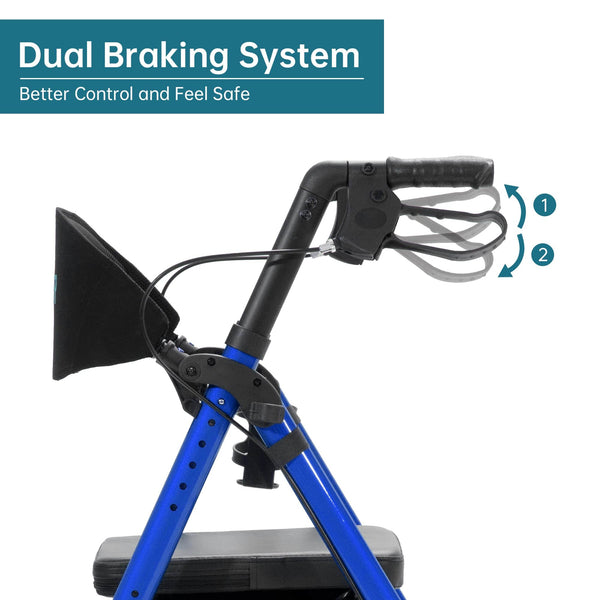
Elenker dual brakes: (1) squeeze to slow down and (2) press down to lock the wheels
This simple feature adds a huge layer of safety. Whether you’re resting on the seat, pausing on a slope, or stopping to talk, the brakes keep the walker steady and secure.
The Seat: Comfort on the Go
The built-in seat might just be the rollator’s best feature. It’s a lifesaver when you need a break from walking, especially for seniors or those with limited endurance. Most seats are padded for comfort and wide enough to sit safely without feeling cramped.
Having a seat means you can go farther without worrying about fatigue. A quick rest in the park, a break in a shopping mall, or even a pause during rehab exercises—all possible without hunting for a bench. Some rollators even feature backrests for extra support, turning them into mini portable chairs.
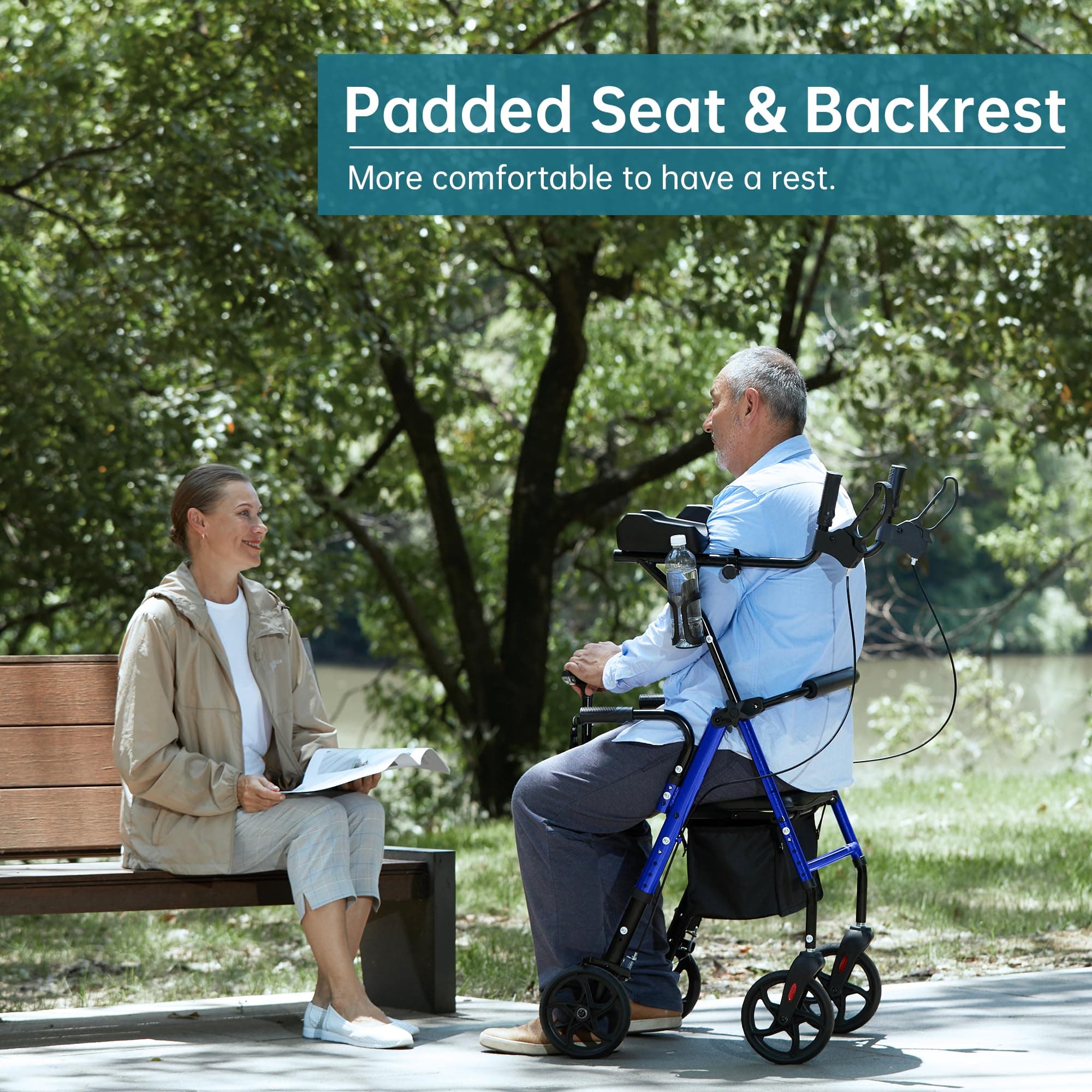
Padded seat & backrest for Elenker MT-8151 upright walker
The Frame: Strength and Balance in Every Step
The frame is the rollator’s backbone. Typically made from aluminum or steel, it needs to be both strong and lightweight. A well-balanced frame supports your weight while keeping the walker easy to push and lift when needed.
Modern rollators often include height-adjustable handles, allowing you to customize the fit for proper posture and comfort. Getting the right handle height prevents back or shoulder strain, making your walks smoother and more natural.
Folding frames are another handy feature—they make storage and transport easy. You can take your rollator in the car, bus, or even on vacation with minimal hassle.

Elenker HFK-9210KDB rollator walker with adjustable handle bar and foldable frame
The Storage Basket or Bag: Convenience You’ll Love
A storage basket or carry bag might seem like a small detail, but it’s one of those features users quickly fall in love with. It’s perfect for carrying essentials like a water bottle, purse, groceries, or medications.
Front baskets are common on outdoor rollators, while under-seat bags keep items safe and hidden. Some models even have detachable pouches for flexibility. This simple feature makes your rollator double as a shopping helper, freeing your hands while you walk.

Elenker YF-9007E rollator walker with front pouch and under-seat basket
The Handles and Grips: Comfort in Your Hands
Handles may not get much attention, but they’re key to making your rollator comfortable to use. Ergonomic grips reduce pressure on your wrists and hands, which is especially helpful if you have arthritis or joint pain.
Adjustable handles are just as important. Setting them to the right height helps maintain good posture and prevents slouching. You should be able to walk with your elbows slightly bent—just enough to stay relaxed while in control.

Elenker HFK-9210KDB-3 lightweight upright walker
The Folding Mechanism: Portability Made Simple
If you’re someone who likes to get out and about, the folding mechanism is a must-have. Most rollators fold inward with a simple pull on a strap or handle, making them easy to store in car trunks or closets.
A foldable Rollator walker isn’t just convenient—it encourages users to stay active. You can take it on trips, use it in therapy sessions, or bring it to social events without worrying about space or transportation.

Foldable Elenker HFK-9210KDB-3 lightweight upright walker with one hand folding mechnism
Accessories That Add Extra Value
Beyond the basic parts, many rollator walkers come with or support useful accessories. From cup holders and cane clips to weather-resistant covers and lights, these small additions make life easier. For example, a tray attachment turns your rollator into a mobile table, while a cane holder keeps everything within reach.
These details may not seem major, but they enhance comfort and independence, especially for seniors or anyone using the rollator daily.

Elenker HFK-9210KDB rollator walker with cane and cup holder
Why the Right Design Matters
Every feature on a rollator is designed with a purpose—to balance stability, comfort and mobility. The combination of smooth wheels, secure brakes, comfortable seating, and lightweight construction makes it a reliable companion for both short indoor walks and longer outdoor adventures.
Choosing the right model depends on your needs. If you mostly walk indoors, a smaller, lightweight rollator with a tight turning radius is ideal. For outdoor use, go for larger wheels and a sturdier frame. Either way, understanding how each part works helps you pick the model that truly fits your lifestyle.
To sum up, a rollator walker is more than a support tool—it’s a smart mobility partner that gives you freedom, safety, and confidence. Every part, from the wheels to the brakes to the seat, plays its role in creating a smooth, reliable experience.
Once you know how each feature works, you’ll see why so many people rely on rollators for daily movement. It’s not just about walking—it’s about walking comfortably, safely and independently, one smooth roll at a time.


