

How to Use a Rollator Walker on Different Surfaces
Oct 17, 2025
Using a rollator walker makes walking safer and easier, but not all surfaces feel the same under those wheels. A smooth indoor floor is one thing, but once you head outdoors-or even across thick carpet—things can change fast. Whether you’re moving up a ramp, crossing sand at the beach, or navigating uneven ground, knowing how to handle your rollator properly can make all the difference in comfort, safety, and confidence.
Let’s break down how to manage different types of terrain and keep every step smooth and stable.
Moving Up and Down Ramps
Ramps are everywhere—driveways, sidewalks, store entrances—and they can look simple but feel tricky if you’re using a rollator walker. The key is control.
When going up a ramp, lean slightly forward, keep both hands firmly on the handles, and push steadily. Avoid rushing—slow and consistent movement helps maintain traction and balance. If your rollator has adjustable resistance or larger wheels, that can help you climb with less effort.
When going down a ramp, lean slightly back to prevent the walker from pulling you forward. Use the hand brakes gently to control your speed. Never try to let the rollator roll freely—keeping light pressure on the brakes keeps things steady.
A quick safety tip: if the ramp looks too steep or slippery (especially in rain or snow), ask for help or choose a different route. Even with brakes, it’s best to avoid unnecessary risk.
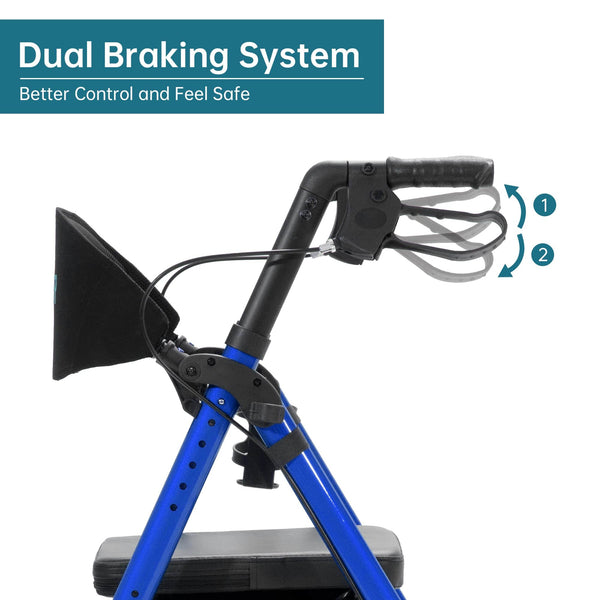
Elenker dual brakes: (1) squeeze to slow down and (2) press down to lock the wheels
Handling Carpeted Floors
Carpeted floors may seem harmless, but thick or plush carpets can slow your rollator’s movement and make steering harder. To move smoothly, keep your rollator’s wheels clean—dust, hair, and fibers can build up and create resistance.
If you feel like you’re pushing too hard, check your wheel size. Larger wheels (around 8 inches) roll over carpet more easily than small ones. For soft or deep-pile carpet, shorter strides and a steady rhythm help maintain balance without straining your arms.
When transitioning between flooring types, such as from hardwood to carpet, slow down before crossing the edge. This prevents sudden jerks that might throw off your balance.
And if you use your rollator at home, rearranging rugs or adding floor transition strips can make movement much smoother.

You can maneuver Elenker HFK-9210KDB rollator walker 12" wheels over carpet easily
Crossing Sandy or Soft Ground
Sand is one of the toughest surfaces for any rollator walker. Whether it’s a beach path or a garden area, those small wheels can sink in easily. If you often walk on sandy or loose surfaces, consider an all-terrain rollator walker with larger, wider wheels. These are designed to grip and roll over uneven ground without getting stuck.
When moving through sand:
(1) Push gently instead of forcing the rollator forward.
(2) Keep your arms relaxed and your steps short.
(3) Avoid dragging the walker - it can dig into the surface.
If you’re planning a beach outing, some users prefer using sand mats or boardwalk paths when available. They provide a more stable surface for rolling.
One extra tip: after using your walker on sand, always clean the wheels. Fine grains can get stuck in the bearings or brakes and affect performance over time.

Rollator walkers with larger wheels can move through sand more easily
Navigating Uneven or Rough Outdoor Paths
Not all outdoor surfaces are smooth. Gravel paths, cobblestones, or uneven sidewalks can test both your rollator and your balance. The best approach here is slow, steady movement.
Keep both hands on the handles and make sure your brakes are working well before heading out. Larger, rubberized wheels work best outdoors because they absorb shock and roll more easily over bumps or cracks. If your rollator has suspension or pneumatic tires, that’s an added bonus for comfort.
Watch where your front wheels go—avoid deep gaps, holes, or large rocks. If you feel unstable, pause and adjust your position before continuing. Sometimes taking a slightly different angle over rough terrain helps maintain stability.
Getting Around Indoors: Tiles and Hardwood Floors
Smooth indoor flooring like tile, vinyl, or hardwood makes rolling effortless—but sometimes too effortless. The rollator can move faster than expected, especially on polished floors.
Keep your hands lightly on the brakes when needed and take your time when turning corners. Rubber tips on wheels or adjustable resistance settings can help control your speed.
If you’re using your rollator in areas like kitchens or bathrooms, make sure the floors are dry and slip-free. Even small spills can create a hazard, and water under the wheels reduces traction.

3 wheel rollator walker with non-slip all terrain wheels
Managing Curbs and Door Thresholds
Curbs and raised thresholds are small obstacles that can trip up new rollator users. The safest way to handle them is by using the step-up technique.
Approach the curb straight on, lock the brakes, and gently lift the front wheels over the edge using the support bar or by tilting the walker slightly backward. Once the front wheels are up, push forward to bring the rear wheels onto the same level.
When going down, keep a firm grip and roll the front wheels off first while applying light pressure on the brakes. Never try to “jump” the walker or roll off fast—it’s safer to take it slow.

Elenker HFK-9236D4 all terrain rollator walker 10" wheels with foot lift
Rain, Snow, and Wet Surfaces
Wet or slippery surfaces add a new challenge. Water reduces traction, and snow can clog wheels quickly. If you must walk in wet weather, make sure your rollator’s tires are non-slip and that your brakes are clean and dry.
Move at a slow, steady pace and avoid sudden stops. Try to keep to drier paths when possible. Afterward, wipe down your rollator to prevent rust or damage from moisture.
Some users also like to add reflective strips or small LED lights to their rollator for visibility during cloudy or dark conditions—it’s a small detail that makes a big safety difference.

Adjusting the Rollator to Suit the Surface
No matter where you walk, your rollator should feel comfortable and stable. Before heading out, check a few things:
(1) Handle height: Your elbows should be slightly bent when holding the grips.
(2) Brakes: Test them to make sure they engage smoothly.
(3) Wheels: Make sure they’re free of debris and turn easily.
Adjusting the handle height or wheel type can make walking on different surfaces feel more natural. A rollator that fits you properly not only improves comfort but also helps prevent fatigue or strain.
Rolling with Confidence
Whether you’re walking up a ramp, crossing soft sand, or gliding over carpet, your rollator walker is built to help you stay steady and mobile. Understanding how different surfaces affect your movement—and adjusting your technique accordingly—can make every outing smoother and safer.
It’s not just about walking; it’s about walking comfortably, confidently and freely wherever life takes you.


