

What if My Rollator Walker Feels Wobbly?
Aug 13, 2025
You’re cruising along with your rollator walker, feeling pretty good about your stability… until one day, something feels “off.” Maybe the handle jiggles a bit more than usual, or the frame sways when you put weight on it. A wobbly rollator walker isn’t just annoying — it can mess with your balance and even put you at risk for a fall.
Don’t panic. In most cases, this is something you can troubleshoot and fix without too much hassle. Here’s what’s going on and what you can do about it.
Why a Wobbly Walker Is a Big Deal
A rollator walker is supposed to give you support and confidence when moving around. If it’s unstable, you might unconsciously change the way you walk to “compensate.” That can strain your back, knees, or hips, and in worst cases, cause you to trip.
In short: don’t ignore the wobble. Even if it feels minor, it’s worth checking out right away.
Common Reasons Your Rollator Feels Wobbly
A rollator walker is basically a frame with wheels, handles and brakes — simple in concept, but each part plays a big role in stability. Here’s where things can go wrong:
1. Loose Bolts or Screws
Over time, the joints and connecting points can loosen. This is especially true if you’ve been folding and unfolding it often, or if you’ve been using it on bumpy surfaces like gravel or brick walkways.
What to do:
Grab the user manual (or look it up online) and check all the screws, nuts and bolts. A basic wrench or screwdriver can usually tighten them back up.
You might be interested in Elenker® Manuals collection
2. Uneven Wheel Height
If one wheel sits higher or lower than the others, the frame can rock slightly. This can happen if the adjustment settings on the legs are uneven, or if a wheel axle is bent.
What to do:
Stand the rollator on a flat floor and check if all four wheels touch the ground evenly. If not, adjust the leg height settings or inspect the wheel for damage.
3. Worn or Damaged Wheels
Wheels take a lot of abuse. Over time, they can wear down unevenly, develop flat spots, or even loosen at the axle.
What to do:
Inspect the wheels closely. If they look worn, wobbly, or cracked, it might be time for a replacement set. Most brands (like Elenker, Drive Medical, etc.) sell replacement wheels that are easy to install.
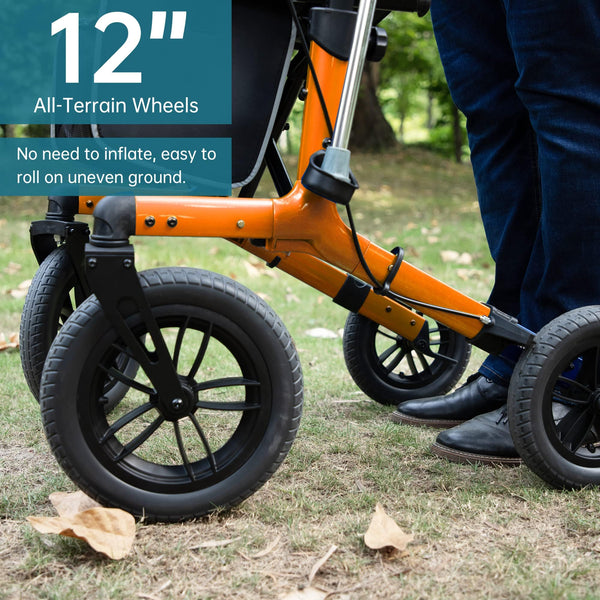
Elenker rollators with all-terrain wheels for uneven ground
4. Loose Handles
If the handles feel like they move when you put weight on them, the height adjustment mechanism might not be locked properly.
What to do:
Check the handle locking knobs or pins. Make sure they’re fully tightened and seated in the correct holes.
5. Frame Damage
If you’ve ever bumped into a wall, dropped your rollator, or accidentally twisted it while folding, the frame can bend slightly. Even a small bend can make the whole thing feel unstable.
What to do:
Check the frame for visible bends or cracks. Unfortunately, a bent frame usually means you’ll need a replacement — and it’s not safe to keep using it.
You might be interested in Elenker Manuals collection
Quick At-Home Stability Check
Here’s a 5-minute test you can do:
(1) Put it on a flat surface. Tile, hardwood, or even a driveway works.
(2) Gently rock it. Push side to side and front to back. Notice where the movement comes from — wheels, handles, or joints.
(3) Press the brakes. Lock both brakes, then try to push. If the frame still moves, it’s not the brakes — it’s the structure.
(4) Check all connections. Tighten anything that feels loose.
When to Call the Manufacturer or a Repair Service
If you’ve tightened everything, adjusted the wheels, and it still feels unstable, it’s time to call in help.
(1) Still under warranty? Many rollator walkers come with a 1- to 3-year warranty. The manufacturer may send you free replacement parts.
(2) Specialty repair shops: Mobility aid stores often have technicians who can repair or replace damaged parts.
(3) Medical supply stores: Some offer free or low-cost inspections if you purchased the walker from them.
How to Prevent the Wobble from Coming Back
Once you’ve fixed it, you probably don’t want to go through it again. Here’s how to keep your rollator in top shape:
(1) Inspect it once a month. Look for loose screws, worn wheels, and frame damage.
(2) Avoid rough terrain when possible. Bumpy surfaces put extra stress on the frame and wheels.
(3) Store it indoors. Rain and humidity can cause parts to rust or weaken over time.
(4) Clean it regularly. Dust and grit can build up in the wheels and joints, causing uneven wear.
Safety Tips If You Must Use It While Wobbly
Ideally, you should fix the wobble before using your rollator again. But if you absolutely must move around before it’s repaired:
(1) Walk slower than usual.
(2) Avoid sharp turns — they increase instability.
(3) Use the brakes when standing still.
(4) Stay on smooth, flat surfaces.
A wobbly rollator walker isn’t something to shrug off. Whether it’s a loose bolt, uneven wheel, or bent frame, fixing it quickly can help you avoid injury and keep your mobility (and confidence) intact. A little regular maintenance goes a long way toward keeping your rollator solid and safe.


