

How to Choose Right Seat Height for Your Rollator Walker
Aug 14, 2025
Picking the right seat height for your rollator walker might not seem like a big deal at first, but trust me, it can make a huge difference in comfort, safety, and ease of use. Whether you’re using it to get around the house, tackle errands, or just rest when you need a break, a properly set seat height can save your knees, back and even your posture. Here’s a casual guide to help you figure it out - without any confusion.
Why Seat Height Matters
You might be thinking, “Does it really matter if it’s a couple of inches too high or low?” The answer is yes. If your seat is too low, you’ll struggle to get up and down, putting unnecessary stress on your knees. If it’s too high, your feet may dangle, reducing stability and making sitting uncomfortable. And let’s not forget walking - if the handles are off because the seat isn’t right, your elbows could be overextended, leading to fatigue and even back pain.
Getting the seat height dialed in keeps both walking and sitting safe and comfortable, and that’s the ultimate goal.
Step 1: Check Your Elbow Angle
Here’s a simple trick: stand up straight and grab the handles of your rollator. Your elbows should have a slight bend, around 20–30 degrees. Too straight? You’ll probably end up leaning forward while walking. Too bent? It might strain your arms and shoulders. Adjusting the height until your elbows feel relaxed helps your walking stay natural and comfortable.
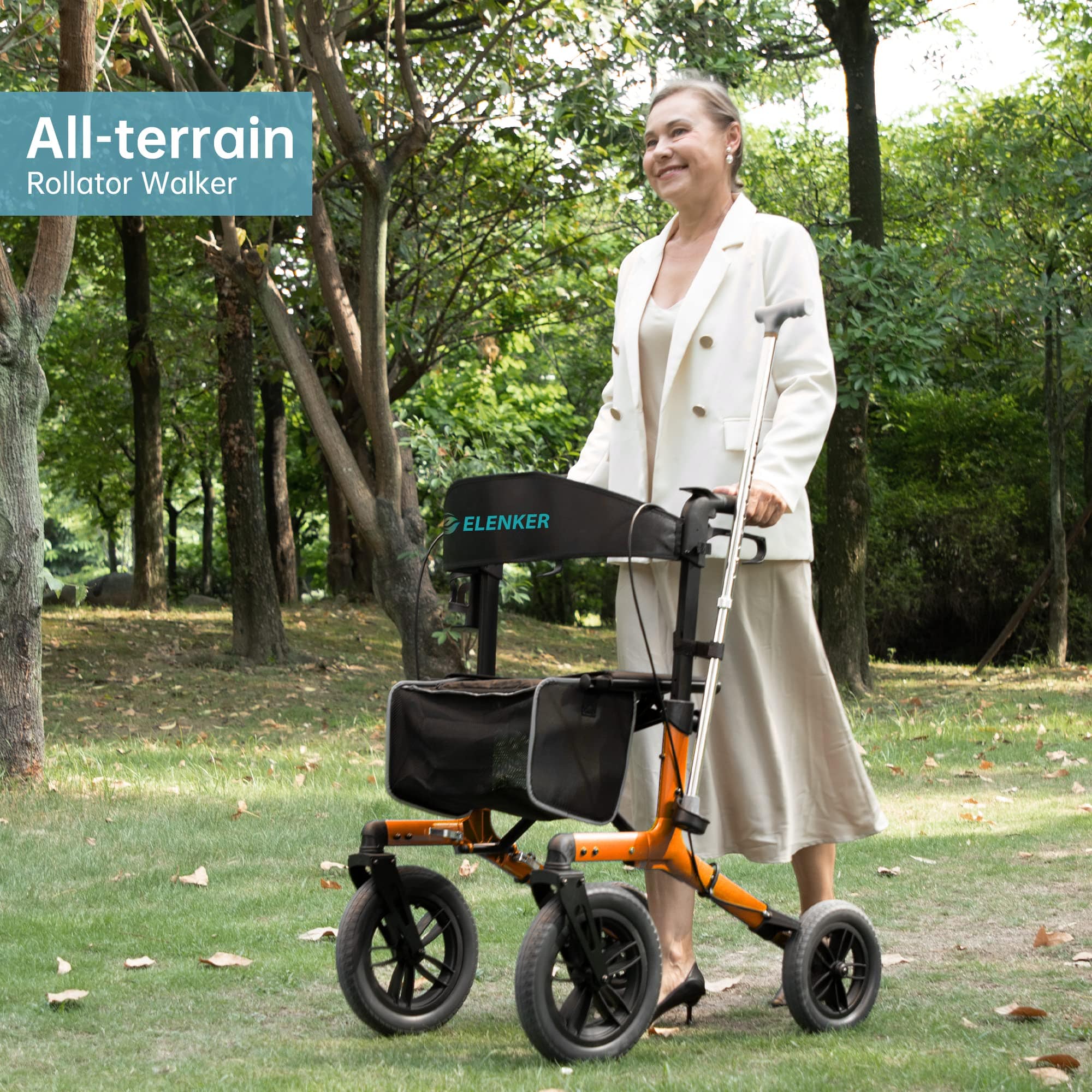
Elbow angle when you use regular rollator walker
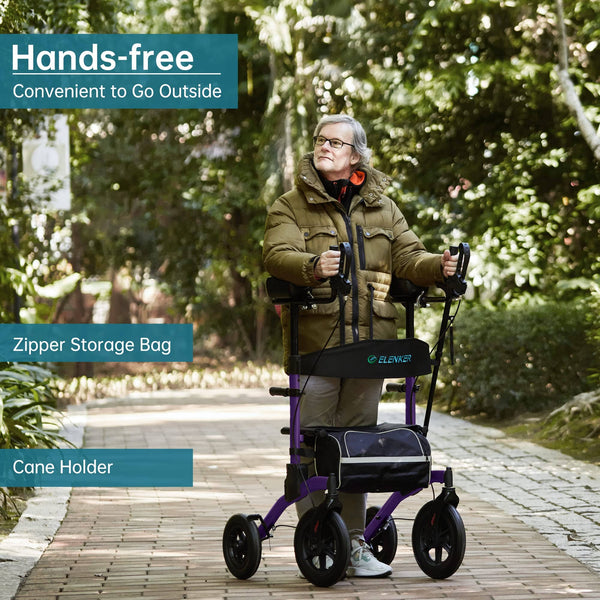
Elbow angle when you use upright rollator walker
Step 2: Test the Sitting Position
The seat isn’t just a resting spot—it’s a tool for safety. Sit down and make sure your feet rest flat on the floor and your knees are about 90 degrees. This position lets you sit and stand without rocking or straining. If your knees are cramped or your feet can’t reach the floor, it’s time to tweak the height.
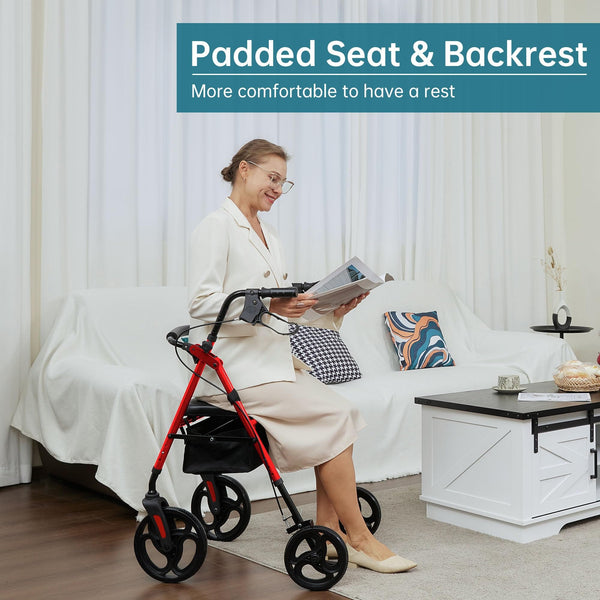
Sit down and make sure your feet rest flat on the floor and your knees are about 90 degrees
Step 3: Think About Walking Comfort
Walking comfort is just as important as sitting. Try rolling the walker around a flat surface. You should be able to push it smoothly without hunching or leaning too far forward. If your body feels awkward or your arms get tired quickly, adjust the seat and handle height again. Small changes make a big difference.
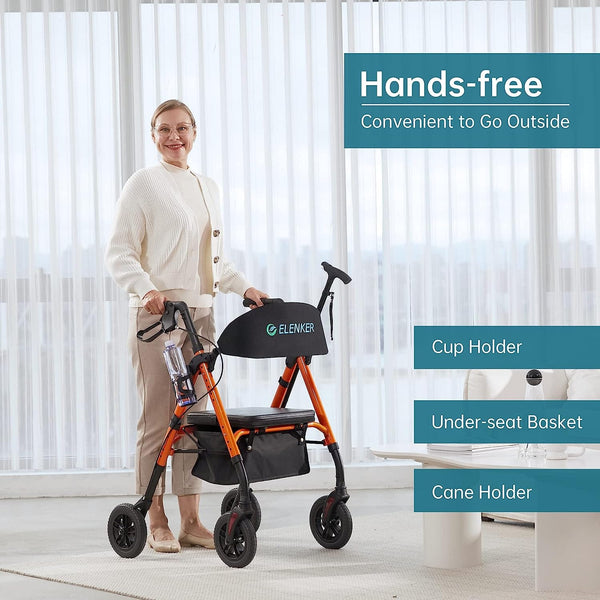
You should be able to push it smoothly without hunching or leaning too far forward
Step 4: Consider Adjustability
Many rollators have adjustable handles and legs, which makes finding the perfect height easier. Don’t hesitate to make tiny tweaks until it feels just right. Remember, you’re aiming for a setup that works for your body, not someone else’s idea of “standard”.
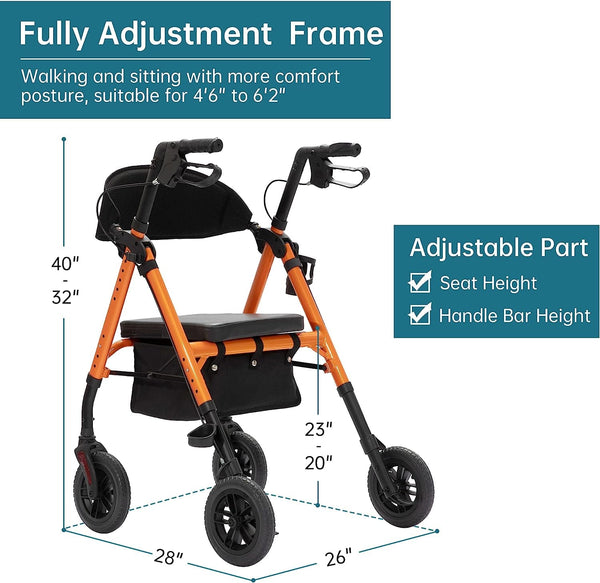
Elenker KLD-9218 all terrain rollator walker with adjustable frame
Step 5: Test on Different Surfaces
If you’re planning to use your rollator both indoors and outdoors, check it on various surfaces. Carpet, tile, and concrete can all feel different when you sit or roll. Make sure the seat height works across all surfaces so you’re not constantly adjusting or feeling unstable.
Extra Tips for a Comfortable Rollator Experience
Check your knees: Make sure the seat doesn’t pinch or press against the back of your knees.
Check the basket or pouch: If your rollator has storage, ensure it doesn’t interfere with your legs while sitting.
Think long-term: Comfort might change over time, especially if your mobility or flexibility changes. Adjustments aren’t a one-time thing.
Quick Rule of Thumb
Walking: Elbows slightly bent at 20–30 degrees.
Sitting: Feet flat on the floor, knees at roughly 90 degrees.
Test everything: Push it, sit on it, and try different surfaces before settling.
Finding the right seat height is not complicated, but it’s worth taking the time. A little adjustment goes a long way in making walking easier, sitting safer, and using your rollator more enjoyable. Remember, comfort is personal—don’t just accept the default setting. Try, test, and tweak until it fits your body perfectly.
With the right setup, your rollator can become a reliable companion for mobility, independence and peace of mind.


