

What Are the Disadvantages of a Rollator Walker and Solutions?
Jul 23, 2025
You’ve got yourself a rollator walker or you’re thinking of getting one. They’re great for extra support when walking, especially if you want something more than a cane but less bulky than a wheelchair. But hey, no tool is perfect. Rollators have a few downsides that might catch you off guard if you’re not prepared.
Don’t worry, though—most of the issues have simple fixes. Let’s walk through them, literally and figuratively.
1. They’re Not Exactly Small or Lightweight
Some rollators are big and a little clunky. Try squeezing one through a tight hallway or the bathroom door and you’ll quickly see the problem. And lifting one into the trunk of a small car? That can feel like a mini workout.
The fix:
Go for a lightweight or foldable rollator if portability is a concern. Aluminum frames tend to be lighter than steel. And if you’re dealing with small spaces at home, look for “narrow” or “compact” models that can still hold your weight comfortably.

All Elenker walkers are foldable
2. Rough Terrain? Not So Fun
Rollators shine on flat, smooth surfaces. But once you hit grass, gravel, cracked sidewalks, or curbs, things can get dicey. The wheels might get stuck, or worse, start wobbling or dragging.
The fix:
If you’re planning to walk outdoors often, consider an all-terrain rollator. These have larger, tougher wheels designed to handle uneven ground. Some even come with suspension for a smoother ride. Also, keep those wheels clean and check for wear—they do a lot of work!

Elenker all terrain upright walker with large wheels
3. They Can Be Awkward Indoors
Ever tried turning a wide rollator around in a tiny kitchen? It’s like trying to do a 3-point turn with a shopping cart. And not every rollator fits through narrow doorways.
The fix:
Before buying, measure your tightest spaces—bathroom doorways, kitchen corners, etc. Some rollators are specifically made for indoor use and come with tight turning radiuses. Also, practice backing up and making tight turns in an open area so you’re more confident when you do need to navigate corners.

Elenker 3 wheel rollator come with tight turning radiuses
4. Poor Posture Sneaks Up on You
One common mistake? People tend to lean forward or hunch over their rollator. Over time, that can lead to sore shoulders, a stiff neck, or even back pain.
The fix:
Check that the handles are adjusted to the right height—your arms should be slightly bent when holding on. If you find yourself leaning a lot, look into upright rollators. They’re designed to keep you standing taller and walking more naturally.

You don't have to hunch over Elenker upright rollator
5. Brake Trouble Can Be a Safety Risk
Brakes are your best friend when it comes to safety, especially on slopes or when you’re using the seat. But if the brakes are loose or you forget to lock them, things can go wrong fast.
The fix:
Get in the habit of checking your brakes every time you head out. If they’re feeling loose, it’s probably time to adjust or replace them. When you sit down, always lock both brakes—and do a quick double-check before taking a break.
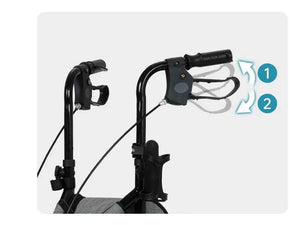
Check the dual brakes: (1) squeeze to slow down and (2) press down to lock the wheels
6. Speed Control Isn’t Always Easy
Some people feel like the rollator runs away from them, especially on a slope or if they walk a little slower. That’s a scary feeling and a real fall risk.
The fix:
If this sounds familiar, try a rollator with adjustable tension or drag control on the wheels. Some models even come with built-in speed limiters. And if you feel like the rollator’s always pulling ahead, take it slow and practice walking in a flat, open space.
7. That Seat Isn’t Always Comfy
Yes, having a seat on your rollator is super convenient, but it’s not exactly a lounge chair. Sit on it too long and your back or rear might start complaining.
The fix:
Add a small seat cushion or buy a model with a padded seat and backrest. Also, try to use the seat more like a quick resting spot, not a full-on sitting session. If you’ll be parked for a while, look for a bench or proper chair instead.

Elenker stand up rollator with padded seat and backrest
8. Not Ideal for Every Health Condition
Rollators are awesome for many people, but they’re not the best fit for everyone. If you have very weak arms, severe balance issues or difficulty using brakes, they might not provide enough support.
The fix:
Talk with a physical therapist or occupational therapist before committing to one. They can help assess your specific needs and may suggest a different type of mobility aid—like a standard walker, a cane or even a knee scooter.
9. Can Lead to Over-Reliance
This one’s a little tricky. Rollators give great support, but some folks start using them all the time—even when they don’t need to. That can lead to muscle weakness and loss of independence.
The fix:
Think of your rollator as a tool for support, not something to rely on 24/7. Keep up with light exercises to maintain strength and balance. Even doing some leg lifts or standing stretches at home can make a big difference.
Rollator walkers are super helpful for tons of people, but yeah—they’ve got a few quirks. The good news? Most of the downsides are easy to fix once you know what to look for. Whether it’s adjusting the height, picking a more suitable model or just getting used to how it rolls, there’s usually a solution that works for your lifestyle.
Bottom line: don’t stress the small stuff. The goal is to stay mobile, safe and confident—whatever that looks like for you.


