

Top Rollator Walker Features for Outdoor Use
Jul 10, 2025
Heading outside with a rollator walker? Awesome. Whether you're out for fresh air, a trip to the store, or just stretching your legs, the right walker can make a huge difference. But not all rollators are built for the outdoors. Some are better off indoors on smooth, shiny floors.
If you're planning to walk on sidewalks, grass, gravel or bumpy paths, you’ll want a rollator that’s up for the task. Let’s talk about the key features you should look for in a rollator that’s actually outdoor-friendly—without making it feel like you’re pushing a tank.
1. A Rollator with Big, Beefy Wheels
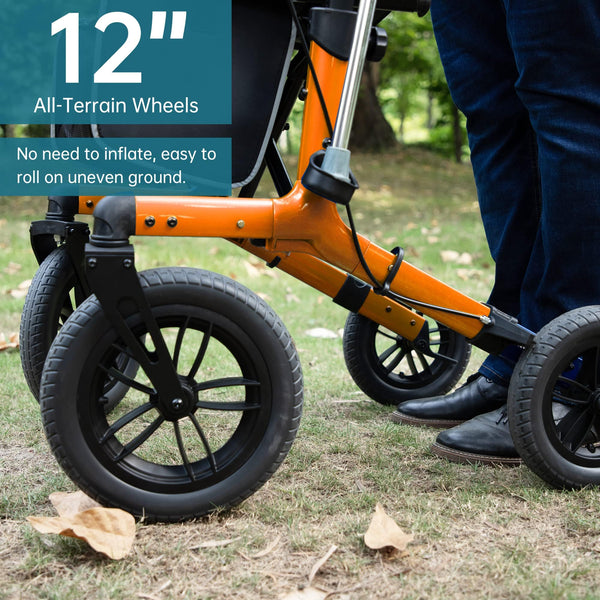
This is a biggie. Outdoor walking means you’ll be dealing with all kinds of surfaces—cracks in the sidewalk, uneven pavement, maybe even a little dirt or grass. Small wheels just don’t cut it out there.
Look for wheels that are at least 8 inches in diameter. Bigger wheels handle bumps and dips way better. They roll more smoothly over rough ground and don’t get stuck as easily. Bonus if they have tread—it helps with grip on gravel or wet paths.
Some rollators even come with all-terrain wheels. If you're regularly out on nature trails or unpaved surfaces, it might be worth going for one of those.
2. Strong Brakes That Actually Hold
Outdoor terrain can be unpredictable. Slopes, hills, uneven pavement, and curbs mean you need a brake system that really works. Look for rollators with loop-style hand brakes that are easy to squeeze and strong enough to hold the walker still when you're resting on a hill.
And don’t forget about parking brakes. If your walker doesn’t lock into place when you sit down, that’s a big safety issue, especially outside.
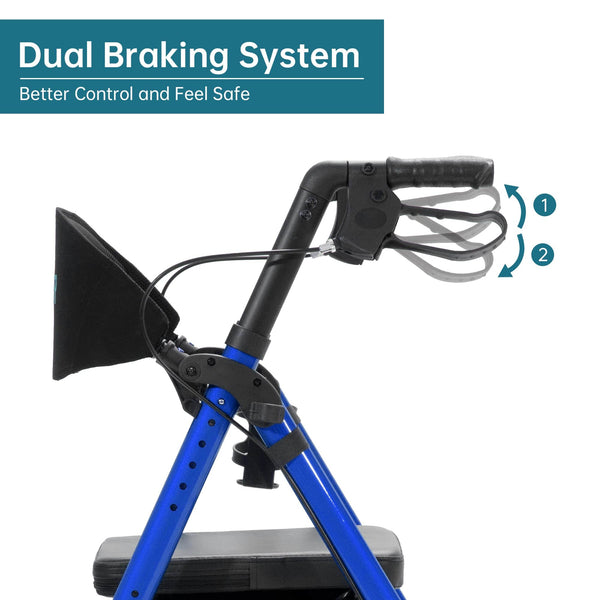
Elenker KLD-9218 rollator walker with dual brakes: (1) squeeze to slow down and (2) press down to lock the wheels
3. Durable Frame That Can Take a Beating
When you’re outdoors, your rollator’s going to take a few knocks—no way around it. You need a frame that’s lightweight but tough. Most good outdoor rollator walkers use aluminum, which keeps things light without being flimsy.
Some rollators are heavier because they’re built for rough use. That’s fine—as long as you can still lift and fold it without breaking a sweat. It’s all about finding that balance between sturdy and manageable.
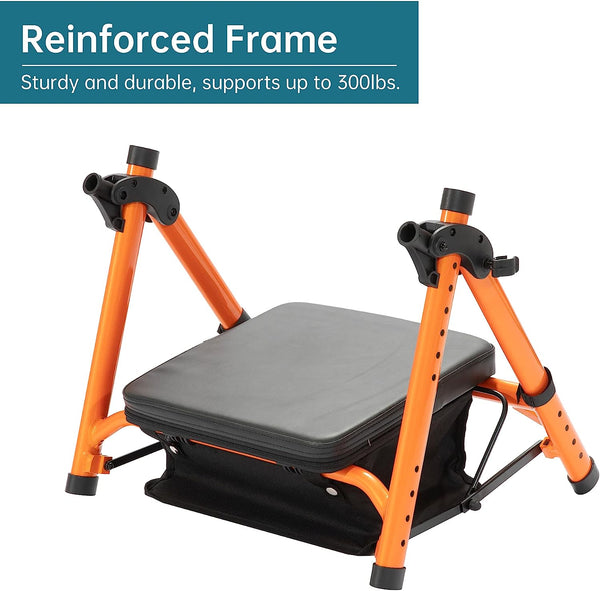
Elenker rollator walker with reinforced frame
4. Comfortable Seat with a Supportive Backrest
Long walks are great, but sometimes you just need to take a break. A built-in seat is super handy when you’re out and about. Look for one that’s wide enough to actually sit on comfortably, with a padded backrest for support.
And check how stable it feels when you sit. You don’t want it wobbling or shifting under you. That’s no fun and definitely not safe.
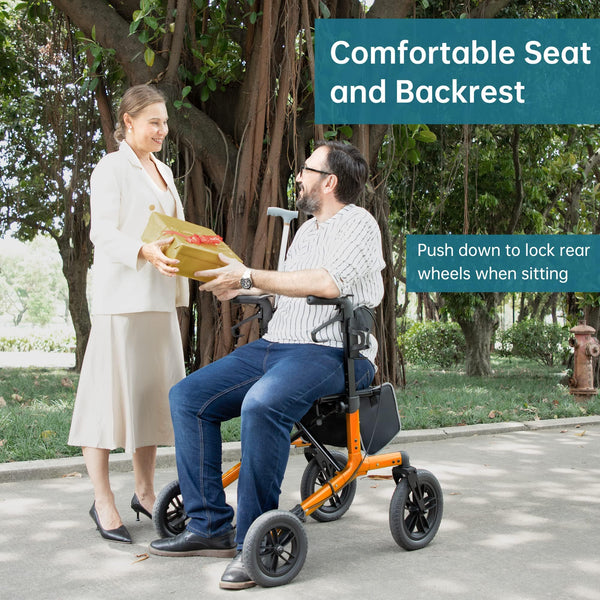
Elenker KLD-9212 all terrain rollator walker with comfortable seat and backrest
5. Adjustable Handle Height
Posture matters, especially on longer walks. If the handles are too low, you’ll be hunched over; too high, and your shoulders will feel the strain. The best outdoor rollators have adjustable handles, so you can tweak them until they feel just right.
Some even come with height markers, which makes setting them up a lot easier, especially if you share the walker with someone else.

Elenker HFK-9211 Shock-Absorbing Rollator Walker with height adjustable handle bar
6. Easy Folding for Transport
Going for a walk in the park? Great. But getting there might mean tossing your rollator into the car. That’s why easy folding is a must. A rollator that collapses quickly and stays folded makes life so much simpler.
Look for one that folds flat or sideways without needing to remove parts. And make sure it locks into place when folded, so it’s not flopping around when you lift it.
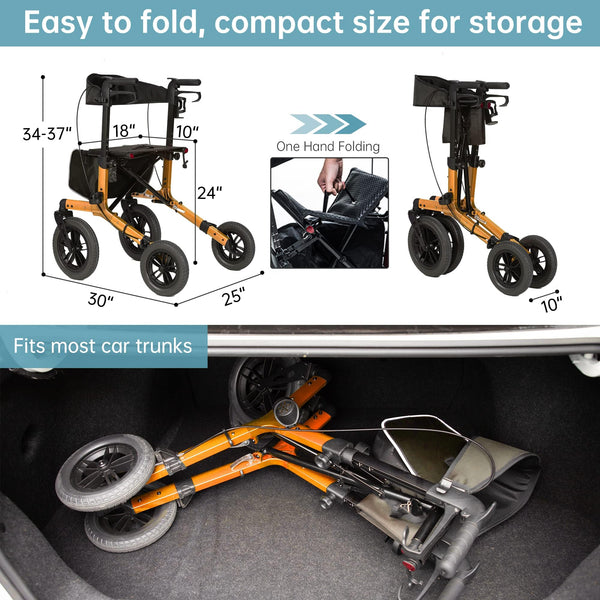
Elenker foldable rollator walker, with one hand folding mechanism, fits most car trunks
7. Storage That Doesn’t Get in the Way
When you’re out for a stroll, you’re probably carrying a few things—keys, water bottle, wallet, maybe some meds or a snack. Outdoor rollators usually have a storage pouch or basket, which is super handy.
Just make sure it’s easy to access and doesn’t make the walker feel front-heavy. Some models have storage under the seat, which keeps your stuff hidden and protected from rain.

8. Weather-Resistant Materials
Outdoor use means exposure to the elements. Your walker might get wet, dusty, or muddy. Look for materials that are rust-resistant (aluminum frames are great for this) and easy to wipe down.
Foam or rubber handles usually handle moisture better than fabric grips. And if you live somewhere rainy or humid, avoid anything that soaks up water and stays damp.
9. Reflective Strips or Lights
If you walk in the early morning or late afternoon, visibility matters. A good outdoor rollator might come with reflective tape or have spots to clip on a light. That little extra visibility can be a big safety boost, especially near traffic.
And hey, if your walker doesn’t have them, you can always add your own reflective stickers or a clip-on LED light. Cheap and super effective.
10. Weight Capacity That Works for You
Always double-check the weight limit on any rollator, especially outdoor ones. Most standard models hold up to 300 lbs, but some heavy-duty or bariatric walkers go up to 500 lbs or more.

Elenker heavy duty bariatric upright walker supports up to 500lbs
Even if you're well under the weight limit, choosing a walker with a little extra capacity often means a sturdier frame and more peace of mind.
A Few Optional Extras If You Want to Get Fancy
You don’t need these, but they’re nice to have:
Cup holders – Stay hydrated on long walks.
Cane holder – If you switch between cane and walker, this is super helpful.
Phone pouch – Because pockets are never big enough.
All-terrain ski glides – For snowy or grassy conditions.
Not all rollators are built for the great outdoors. But if you grab one with the right wheels, solid brakes, a comfy seat and a few weather-ready features, you’ll be good to go. Whether it’s a stroll around the block, a trip to the farmer’s market, or a roll through the park, the right walker makes every outing feel easier and safer.
Take your time, try a few out if you can, and pick one that fits your lifestyle—not just your living room. Walking outside should feel freeing, not frustrating.


