

Can I use a rollator walker in the rain or snow?
Jul 10, 2025
You’ve got a rollator walker and now you’re staring out the window at a cold drizzle—or maybe a whole winter wonderland - and thinking, “Can I still head out?” Great question. Just because the weather takes a turn doesn’t mean life stops, right?
The short answer is: yes, you can use a rollator walker in the rain or snow, but it’s not always smooth sailing. There are definitely a few things you’ll want to think about first.
Rain, Rain, Go Away... or Not?
Let’s start with rainy days. Maybe it’s just a sprinkle, maybe it’s a full-on downpour. Either way, here’s what matters when using a rollator walker in wet weather.
1. Watch the Grip
Water and slick pavement? Not the best combo. Even though most rollator walkers have rubber wheels, they can still slip on smooth, wet surfaces like tile, stone or painted concrete. If your walker has smaller wheels or ones made for indoor use, it might not do so well outside in the rain.
Larger wheels with good tread give you better traction. If your rollator’s wheels look flat or smooth, they might be due for a replacement—especially if you’re planning on walking in wet conditions.

Elenker YF-9007A heavy duty rollator walker with no-slip tread pattern 10" wheels
2. Brakes Can Be Tricky
Wet conditions can affect your brakes, too. They might not respond as quickly or firmly as they would on a dry day. Before heading out, test them out in a safe spot—make sure they’re still grabbing properly. Some people even towel off the brake area before starting a walk, just to be safe.
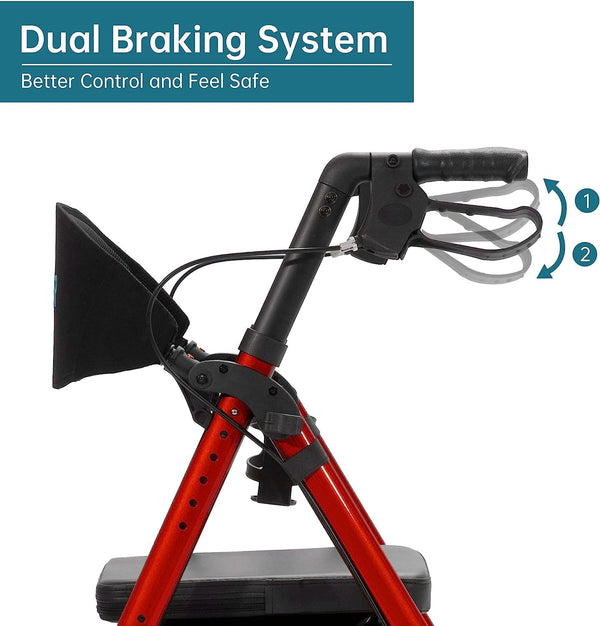
Dual Brakes: (1) squeeze to slow down and (2) press down to lock the wheels
Snow and Ice? That’s a Whole Different Ball Game
Now let’s talk snow. Using a rollator walker when it’s snowing—or when there’s snow on the ground—can be a little more intense than just dealing with rain.
1. Wheels Matter Even More
This is where big, rugged wheels can be your best friend. Think 8 inches or more, ideally with thick tread. Some rollators are actually designed with all-terrain wheels that grip better on slippery ground. If your walker has those tiny indoor wheels, snow's probably not the time to take it out.
2. Avoid Ice Like the Plague
Even with a great rollator, ice is no joke. It’s unpredictable, nearly invisible sometimes, and one bad slip can lead to a fall. No walker—no matter how sturdy—is completely ice-proof. So if there’s a layer of ice on your path? Stay inside or get someone to help.
3. Check the Seat Before You Sit
If your seat is wet or snowy, sitting down can get cold and uncomfortable fast. Some folks keep a small towel or plastic bag handy to dry it off or protect it. Bonus: it works for the handle grips too, which can get slippery or freezing cold in winter weather.
Helpful Tips for Bad Weather Walks
Alright, so you’ve decided to brave the elements. Cool. Here are some real-world tips to help make that outing safer and easier:
1. Use an Umbrella or Rain Poncho
Sounds simple, but keeping yourself and your walker dry helps everything work better. An umbrella is great, but if it’s windy or you need both hands on the handles, a hooded rain poncho or coat works better. They even make ponchos with clear visors for extra visibility.

2. Cover the Walker
A waterproof rollator cover or a plastic sheet can help protect the seat, brakes and storage pouch. You don’t need anything fancy—just something to keep the important parts dry.
3. Slow It Down
Wet or snowy ground can make walkers less stable, so slow your roll. Take smaller steps, especially when turning or going downhill. No need to rush. Better safe than sliding.
4. Clear Vision Is Key
Rain droplets on glasses, fog, or even just water in your eyes can mess with visibility. Wear a cap with a brim, or try anti-fog glasses spray if that’s an issue.
5. Reflective Gear or Lights
Bad weather usually means low visibility—for you and for cars. If you're going out early, late, or when it’s cloudy, consider reflective strips, a safety vest, or even a small light on your rollator. You’d be surprised how invisible you can be in a rainstorm.
Are Some Rollators Better for Weather?
Absolutely. While most rollators are built for general use, some are specifically designed for outdoor adventures. Here’s what to look for if you need a rollator that can handle the elements:
(1) All-terrain or off-road wheels
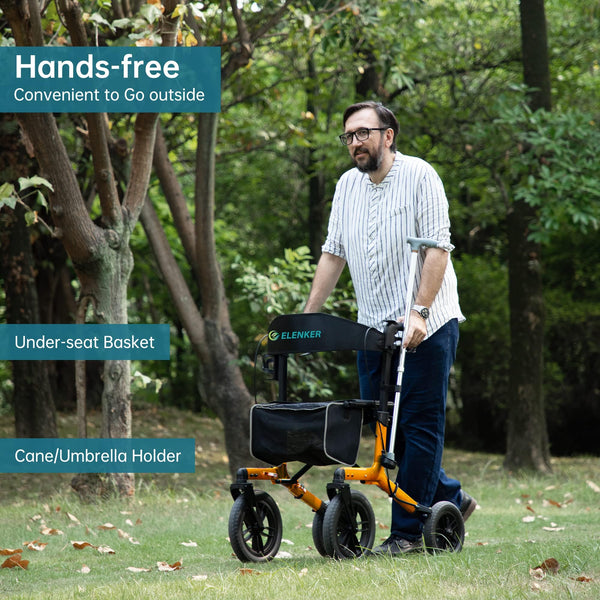
(2) Rust-resistant frame (aluminum is great for this)
(3) Good grip on handles (rubber is better than foam in wet weather)
(4) Locking brakes that hold strong, even when damp
(5) Weatherproof seat or seat cover
Brands like Elenker, Drive Medical, and a few others offer models with rugged features built for tougher conditions. It might be worth the investment if you live in a place with lots of rainy or snowy days.
When to Just Stay In
Hey, there’s no shame in playing it safe. If the weather is truly bad—think icy sidewalks, deep snow, heavy wind—it might be better to wait it out or get help. There are other ways to stay active indoors until the skies clear. A treadmill, a walk inside the mall, or even laps around your hallway can do the trick.
Yes, you can use a rollator walker in the rain or snow, but it takes a little extra planning. The right wheels, proper brakes, and a few common-sense precautions go a long way. Keep yourself dry, walk slowly, and don’t take chances if the ground looks iffy.
Weather doesn’t have to stop you—it just means walking a little smarter.


