

How Can a Rollator Walker Help with Balance Training?
Oct 21, 2025
For many people, especially older adults or those recovering from an injury, balance can be a real challenge. It’s one thing to walk across a smooth floor at home, but quite another to navigate uneven sidewalks, crowded streets, or even just getting up from a chair safely. That’s where a rollator walker can do more than just help you get from point A to point B—it can actually support your balance training.
Building Confidence Step by Step
Balance training isn’t about suddenly standing on one leg or hopping across the room. It’s about building confidence while strengthening the muscles that keep you upright. A rollator walker provides a stable frame that you can hold onto while walking. Unlike a cane, which supports only one side, or no support at all, the rollator gives you both hands free to control your movement and feel secure.
When you walk with a rollator, your body naturally engages your core, hips and legs. These are the same muscles you rely on to maintain balance. Every step you take while holding onto the walker is a mini exercise, helping you train the coordination and strength needed to stay steady.
Encouraging Proper Posture
One of the hidden benefits of using a rollator walker is that it encourages you to stand upright. Bad posture can throw off your balance and make falls more likely, but a well-designed rollator encourages a straight, upright position. Your shoulders are back, your head is up, and your feet land firmly on the ground with each step. This alignment isn’t just safer—it’s a subtle form of balance training every time you move.
Some walkers, especially upright rollators, are designed with ergonomic handles that help you maintain the right posture. By practicing walking in this position, you gradually train your body to move more efficiently and with better control, which naturally enhances your balance.
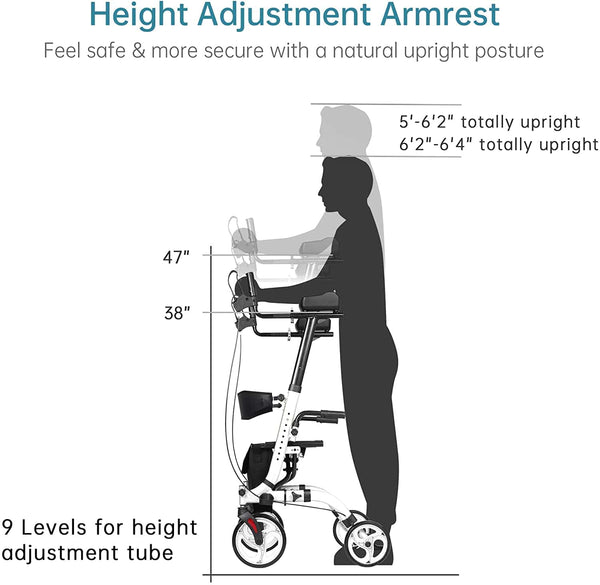
Elenker upright rollators help you walk upright
Practicing Controlled Movements
Balance isn’t just about standing still; it’s about controlled movement. A rollator walker allows you to practice this safely. For example, you can walk at a slower pace, take wider steps, or navigate turns while keeping both hands on the handles. The brakes on the rollator give you the option to stop immediately if you feel unsteady, providing a safe environment to push your limits without risking a fall.
Some people use the rollator to practice stopping and starting on command, which is another key skill for balance. Learning to shift your weight gradually while moving prepares your body for real-world situations, like stopping at a curb or slowing down in a crowded hallway.
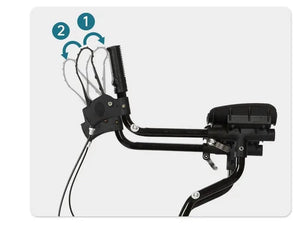
Dual Brakes: (1) squeeze to slow down and (2) press down to lock the wheels
Strengthening Muscles Used for Balance
When you walk with a rollator, it’s not just your arms doing the work. Your legs, core, and even your back are engaged to keep you moving steadily. This gentle, consistent engagement builds the strength and endurance needed for better balance. Over time, users often notice they can walk more confidently without leaning heavily on the walker.
Some rollators even have features like adjustable resistance or wider wheelbases that make walking slightly more challenging. This controlled difficulty can add a small workout element, helping to improve muscle tone and coordination.
With Elenker rollator walker, you can strengthen muscles
Safe Exploration of Different Surfaces
Another advantage of using a rollator for balance training is that it lets you practice walking on a variety of surfaces safely. At home, it might be hardwood or carpet. Outside, you may encounter concrete, grass, or small inclines. The rollator provides a secure base that allows you to adapt to these different surfaces without fear.
This type of real-world practice is crucial. Balance training isn’t effective if it only happens on a flat, controlled floor. Learning to adjust your steps and weight on varying terrain builds agility and prepares you for daily life challenges.
You might be interested in how to use a rollator walker on different surfaces
Integrating Breaks into Training
Fatigue can be a hidden cause of imbalance. The rollator’s built-in seat lets you take short rests when needed, preventing tired muscles from compromising your stability. These mini-breaks also make it easier to practice longer walking sessions without overexertion. By pacing yourself and practicing controlled movement with the option to rest, you’re training balance safely and effectively.

Elenker HFK-9240-2 upright walker with sit-to-stand to stand up easily
Encouraging Independence
Perhaps one of the most important benefits of using a rollator for balance training is the psychological boost. Knowing you have support allows you to push yourself a little further than you might without it. The combination of physical support and mental confidence encourages regular practice, which in turn improves balance more effectively.
Many seniors or rehab patients who use a rollator for balance training report feeling more comfortable moving around their home, visiting friends, or simply taking a short stroll outside. This independence reinforces their willingness to stay active, creating a positive feedback loop for both confidence and physical stability.
Elenker rollators for balance training encourage independence
Making It Part of Your Daily Routine
Balance training with a rollator doesn’t require a special setup. You can incorporate it into your daily walks, errands, or even simple hallway practice at home. Consistency is key. The more you engage your muscles and practice controlled movement, the stronger and more confident you’ll become.
Even small steps, like walking to the mailbox or around the living room a few times a day, add up. Each step is an opportunity to practice posture, engage core muscles, and respond to balance challenges safely.
The Long-Term Benefits
Over time, using a rollator walker as a balance training tool can lead to noticeable improvements. Users often find they can move more confidently, handle minor obstacles without losing balance, and experience fewer fatigue-related wobbles. Combined with occasional supervised exercises or physical therapy, a rollator becomes not just a mobility aid but a practical training partner.
It’s a tool that grows with you: you start with full support, gradually gain confidence and strength, and may even find yourself relying less heavily on it as your balance improves.
A rollator walker does more than assist with walking—it supports balance, builds strength, and fosters independence. By encouraging proper posture, engaging key muscles, allowing safe navigation of different surfaces, and giving users a chance to rest when needed, it becomes an essential tool for anyone looking to improve balance safely.
With regular practice and mindful use, the rollator can turn simple daily walks into effective balance training sessions, helping users feel confident, steady, and in control every step of the way.


