

Do Rollators Tip Over Easily and Solutions?
Jul 27, 2025
Rollator walkers are a common mobility aid for folks who want stability with a bit of freedom. Four wheels, hand brakes and even a comfy seat - pretty sweet, right? But if you’ve ever wondered, “Can these things tip over?” - well, you’re not alone.
Do rollators tip over easily? Not really — but yes, it can happen. The good news is, there are some super simple ways to avoid it. Let’s talk about when tipping might happen, why it happens and what you can do to stay safe while still rolling in style.
When Rollators Tip Over And Why
While rollators are designed with safety in mind, they’re not invincible. Here are a few common reasons why a rollator might lose its balance.
1. Leaning Too Hard on One Side
If you put too much weight on just one side of your rollator — especially while turning — it might tip sideways. It’s kind of like leaning too far on a shopping cart. Things get wobbly.
2. Going Down Curbs or Uneven Surfaces
Rollators aren’t meant for stairs or big drop-offs. If you try to go down a curb or roll through thick grass or gravel, there’s a chance your rollator could tilt forward or sideways.
3. Not Locking the Brakes Before Sitting
That seat looks tempting, right? But if you plop down without locking the brakes, the rollator could slip backward or shoot forward — and boom, you’re on the ground.
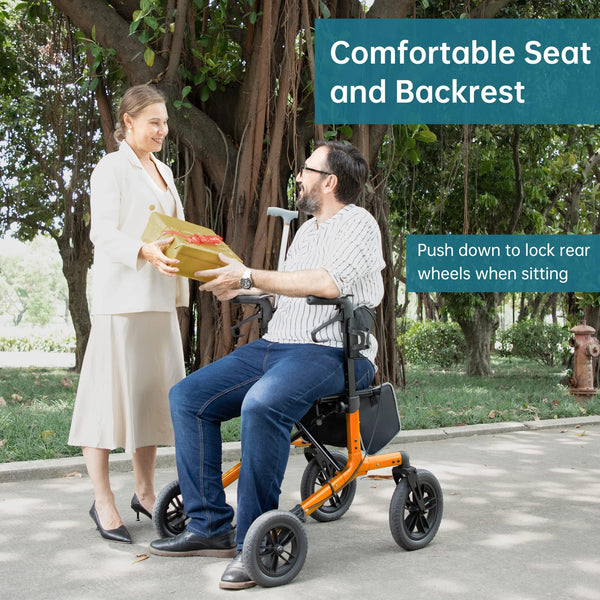
Elenker KLD-9212 all terrain rollator walker, push down to lock rear wheels when sitting
4. Going Too Fast Down a Slope
Speeding down a hill or ramp can make a rollator get ahead of you. If you’re not using the hand brakes properly, it could tip or pull you off balance.
5. Turning Too Quickly
Sharp, fast turns — especially on smooth floors — can make a rollator wobble or tip. This is even more risky if you’re indoors and there’s not much space to maneuver.
So, How Do You Prevent It?
Here’s where the solutions come in. A few tweaks to how you use your rollator can make a big difference.
1. Always Lock the Brakes Before Sitting
This one’s simple but super important. Before you sit on that built-in seat, pull the brake levers down to lock the wheels. No locked brakes = no safe sitting.
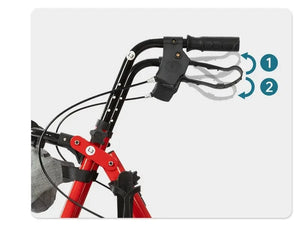
Dual Brakes: (1) squeeze to slow down and (2) press down to lock the wheels
2. Walk Upright, Not Hunched Over
Adjust the handle height so you’re not leaning too far forward. A hunched posture puts weight in the wrong places, and that messes with the rollator’s balance.

Elenker YF-9007B rollator walker with height adjustable frame
3. Take It Slow on Ramps and Slopes
Going downhill? Use those hand brakes! Keep things slow and steady. Think of it like cruising — not racing.
4. Watch the Terrain
Stick to flat, smooth surfaces whenever possible. If you need to tackle grass, dirt or gravel often, look into an all-terrain rollator walker. These come with bigger wheels and better suspension to handle bumps and dips.

Elenker All Terrain Upright Walker with Large Wheels
5. Don’t Try to “Hop” Curbs
It’s tempting to just nudge your way off a curb, but resist the urge. Always use curb ramps or ask for help. Rollators aren’t built for that kind of drop.

Elenker YF-9007B rollator walker with curb climber
6. Avoid Sharp Turns
Especially if you're on tile or wood floors, don’t whip the rollator around like you're doing a spin move. Slow down, take wider turns, and stay in control.
Quick Tips That Make a Big Difference
(1) Use both hands when operating the rollator.
(2) Keep your belongings light. Too many heavy items in the storage basket can affect stability.
(3) Check the wheels and brakes regularly. A poorly maintained rollator is a wobbly rollator.
(4) Get a proper fit. Make sure your rollator’s height is set based on your body — not just the store default.
Choosing a More Stable Rollator
Not all rollators are built the same. If tipping is a concern for you or someone you love, consider these features when shopping around:
(1) Wide wheelbase: The wider the base, the more stable the ride.
(2) Larger wheels: Especially for outdoor use, bigger wheels = smoother balance.
(3) Lower center of gravity: Some models are built closer to the ground for better stability.
(4) Lightweight but strong frame: Avoid super heavy models that are hard to control, but don’t go too flimsy either.
Some brands even make upright walkers, which encourage better posture and tend to reduce tipping since your center of gravity stays aligned.

Elenker upright rollators encourage better posture and tend to reduce tipping
Who’s Most at Risk for Tipping?
Not everyone uses a rollator the same way. Tipping tends to be more of a risk if:
(1) You’re using it one-handed while holding a bag or phone
(2) You have balance or vision issues
(3) You forget to lock the brakes often
(4) You try to use it like a scooter or lean hard while walking
Being aware of your habits (or your loved one’s habits) can help you spot risky behavior before it leads to a fall.
Refer to article: 10 Common Mistakes That Can Lead to Falls with a Rollator Walker
So rollators don't tip over easily if you’re using them right.
The truth is, most rollator accidents come from user habits - not design flaws. A little awareness, a few safety tweaks and maybe choosing the right model for your lifestyle? That’s all it takes to keep things smooth, safe and steady.
Rollators can seriously improve mobility and independence - just make sure you're rolling with care, not rolling the dice.


