

Can I Use a Rollator Walker with Seat at Work?
Jul 13, 2025
If you've ever wondered whether it's okay to bring a rollator walker with seat to your workplace, the answer is yes—you absolutely can. In fact, many people find that using a rollator walker at work helps them move around more easily, stay independent, and reduce fatigue throughout the day.
Why Use a Rollator Walker with Seat at Work?
Whether you're recovering from surgery, managing a chronic condition or simply need extra support to move around, a rollator walker can make a world of difference during your workday.
The seat lets you rest whenever needed without searching for a chair. The frame offers balance support, and many models come with handy storage compartments to carry work essentials.
Some of the most common reasons people use rollator walkers with seats at work include:
(1) Chronic fatigue or joint pain
(2) Balance or mobility issues
(3) Long walking distances in large offices
(4) Jobs that require standing for long periods
What Types of Jobs Work Well with a Rollator?
You’d be surprised how many different types of jobs can accommodate a rollator walker:
(1) Office jobs: Rolling from your desk to meetings or the breakroom is no problem.
(2) Retail or customer service: A rollator can help you stand longer and move more comfortably.
(3) Teaching or healthcare: For professionals on their feet all day, a seat on the go can be a real lifesaver.
(4) Warehouse or industrial work: Heavy duty rollator walkers with larger wheels can handle rougher surfaces.
If your job involves moving between rooms or standing for long stretches, a rollator walker with seat can help reduce stress on your joints and keep you going strong all day.
Choosing the Best Rollator Walker for the Workplace
If you're planning to use a rollator at work, here are a few things to look for:
1. Compact & Foldable Design
Workplaces can get crowded. A rollator that folds easily will let you tuck it away under your desk or against the wall.

2. Comfortable Seat & Backrest
A padded seat and backrest can make short breaks much more comfortable, especially during long meetings or while waiting for transport.

Elenker HFK-9240 upright walker with breathable seat and backrest
3. Quiet, Smooth-Rolling Wheels
No one wants to be the person squeaking through the hallway. Look for models with non-marking, smooth-rolling wheels for a quiet, professional vibe.
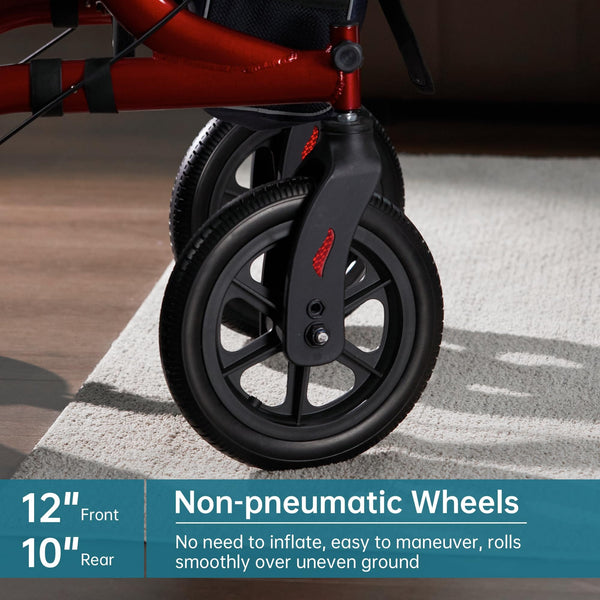
Elenker HFK-9210KDB all terrain rollator walker with smooth-rolling wheels
4. Storage Bag or Basket
If you’re carrying files, a laptop, snacks or personal items, choose a rollator with a roomy, secure storage option.

Elenker YF-9007E rollator walker with front organizer pouch, under-seat basket, cup holder and cane holder
5. Adjustable Height
Make sure the handles and seat height work well with your body. Proper ergonomic fit makes a huge difference in all-day comfort.

Elenker YF-9007E all-terrain rollator walker with adjustable frame
Will a Rollator Fit in an Office Space?
Most rollator walkers are built to be narrow enough for standard doorways and hallways, and they roll easily over smooth flooring. If your office desk is a bit tight, just check the dimensions of your rollator’s seat height and handle width before bringing it in.
Some rollator users prefer to use their device as their office chair if the seat is padded and supportive enough. It all depends on comfort and what feels right for your body.
What About Stairs or Elevators?
If your workplace has stairs and no elevator, a rollator walker can be tricky. Most are not designed for stair use, so you’ll need an alternate plan. That might include:
(1) Requesting to work on a lower floor
(2) Storing a rollator at the top and bottom of the stairs
(3) Talking to HR about accessibility solutions
If you’re using an all-terrain rollator or heavy-duty model, double-check the elevator dimensions to ensure it fits comfortably.
Do I Need to Tell My Employer?
It’s a good idea to have a quick conversation with your manager or HR department—especially if this is a new accommodation. Most employers are supportive, especially if a rollator walker helps you do your job safely and comfortably.
In many countries, including the U.S., mobility aids like rollator walkers are considered a reasonable workplace accommodation under laws like the Americans with Disabilities Act (ADA). That means you’re allowed to bring one in if it helps you work more effectively.
Will Coworkers Treat Me Differently?
In most cases, people adjust quickly. They might ask a couple of curious questions at first, but once they see you using the rollator with confidence, it becomes just another part of your day. Many people even find their coworkers are supportive and helpful.
If you're ever feeling awkward, just remember: you're taking care of your health and doing what you need to keep working effectively.
Bonus Tips for Using a Rollator at Work
(1) Keep it clean: Wipe down wheels if it gets dirty outside—especially if you’re going into a shared indoor space.
(2) Label your rollator: If your workplace has multiple users, adding a name tag avoids mix-ups.
(3) Practice maneuvering: If you're new to using a rollator, take a few test runs around your office layout before jumping into a busy workday.
Yes, you can absolutely use a rollator walker with seat at work. It’s a smart, practical way to stay mobile, comfortable, and independent during your workday. Whether you're behind a desk, on your feet or somewhere in between, a rollator can make your work life easier without slowing you down.
The key is finding a model that fits your workspace, your lifestyle and your comfort needs. And if it helps you feel better while getting the job done—that’s a win in anyone’s book.


