

Who Should Not Use a Knee Walker (Knee Scooter) ?
Oct 09, 2025
Knee walkers (also called knee scooters) are a great way to stay mobile when one leg’s out of commission. They’re smoother than crutches, easier on your arms, and give you the freedom to roll around instead of hopping everywhere.
But here’s the thing: not everyone should use a knee walker. Yep — while they’re amazing for a lot of people recovering from foot or ankle injuries, there are some cases where a knee walker just isn’t the safest or most comfortable option.
If you’re thinking about getting one, this quick guide will help you figure out whether it’s the right fit for you — or if you should look at other mobility aids instead.

Elenker knee scooter 10" wheels with bag
1. People With Injuries Above the Knee
A knee walker is designed for lower-leg injuries — think foot, ankle, or lower calf. You rest your injured leg on the padded platform and push yourself forward with your good leg.
If your injury is in your knee, thigh, or hip, though, the story changes. Resting your leg on the platform can put pressure on the wrong areas and slow down healing.
For example:
(1) After a knee replacement, you need to avoid bending the knee too much.
(2) After a hip surgery, you shouldn’t put pressure on your leg or twist your pelvis.
In both cases, a knee walker would actually make things worse. If you’re recovering from those kinds of surgeries, your doctor might suggest a walker with seat and wheels or a rollator walker instead.
2. Anyone With Balance or Coordination Problems
To use a knee walker safely, you need decent balance and body awareness. You steer, brake and push — all while standing on one leg.
If you have balance issues, vertigo, tremors or coordination problems, that combo can get tricky (and dangerous). You might lose your balance when turning, or accidentally roll too fast downhill.
In that case, a traditional walker or crutches might be more stable. And if you still want the convenience of wheels, a medical rollator walker with hand brakes and a seat can be a great alternative.
You might be interested in the article: how to choose the right walker
3. People With Weak Upper Body Strength
Using a knee walker isn’t physically demanding, but it still takes arm and hand strength to control it. You’ll be braking, steering, and lifting it over small bumps.
If you have conditions like arthritis, muscle weakness or nerve damage that make gripping or braking hard, you could struggle to keep control.
In that situation, a lightweight rollator or even an electric mobility scooter might suit you better. They offer more support without needing as much upper-body effort.
4. People Who Live in Tight or Crowded Spaces
Knee walkers roll beautifully on smooth, open surfaces — but they can feel clunky in tight apartments or narrow hallways.
If your home has lots of furniture, tight corners, or stairs, you’ll find it tough to maneuver. And speaking of stairs — knee walkers should never be used on them. They’re just not designed for that.
If your living space is small or has steps, consider a foldable medical knee walker for short distances, and keep a pair of crutches handy for stairs or smaller areas.

Elenker MT-9251 Foldable Knee Walker
5. Anyone Who Needs to Use Both Legs for Support
Here’s a simple rule: a knee walker only works if you can bear weight on one leg.
If both of your legs are injured, or if one is too weak to push you forward, it’s not safe.
This can happen with conditions like neuropathy, muscular dystrophy, or severe arthritis, where both sides feel unstable. In that case, you might want to talk to your doctor about using a wheelchair or seated rollator walker instead.
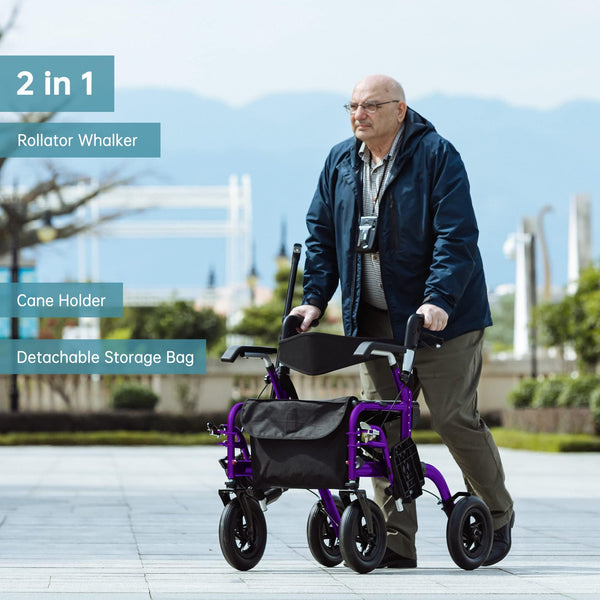
You can sit in or walk with 2 in 1 rollator walker
6. People With Poor Vision or Cognitive Challenges
Operating a knee walker safely requires awareness — you need to see where you’re going, react quickly, and use the brakes properly.
If you have poor eyesight or cognitive conditions like dementia that affect judgment, a knee walker can become a fall risk.
It’s not about age — it’s about how well you can handle movement and coordination. Some people do great with them; others are safer with a different mobility aid.
7. People Who Spend a Lot of Time Outdoors
Sure, you can take a knee walker outside, but not every surface is friendly to it. Gravel, grass, sand, and uneven sidewalks can make it wobbly and unstable.
If you’re mostly outdoors or live in a rural area, look for an all terrain knee walker — they’ve got larger, air-filled tires that handle rough ground much better.
Otherwise, for basic indoor use, a regular indoor knee scooter is just fine.
8. People Recovering From Major Surgeries or with Fragile Skin
Some people are more sensitive to pressure — especially if they have circulatory problems, diabetes or fragile skin. Resting the leg on the platform for long periods can cause irritation or slow down wound healing.
If that’s you, it’s worth checking with your doctor or physical therapist before using a knee walker. They might suggest a padded cushion or even a different mobility option that keeps pressure off your leg entirely.
9. People Who Can’t Safely Control Speed or Braking
It sounds simple, but braking properly is key to using a knee walker safely. If you find it hard to grip the brake handles or your reflexes are slower, that can be a safety concern — especially on slopes or ramps.
Brakes on most medical knee walkers are similar to bicycle brakes. You squeeze to slow down and push down to lock. If you can’t comfortably control that, you might want to consider something more stable, like a walker with no wheels or an upright rollator.
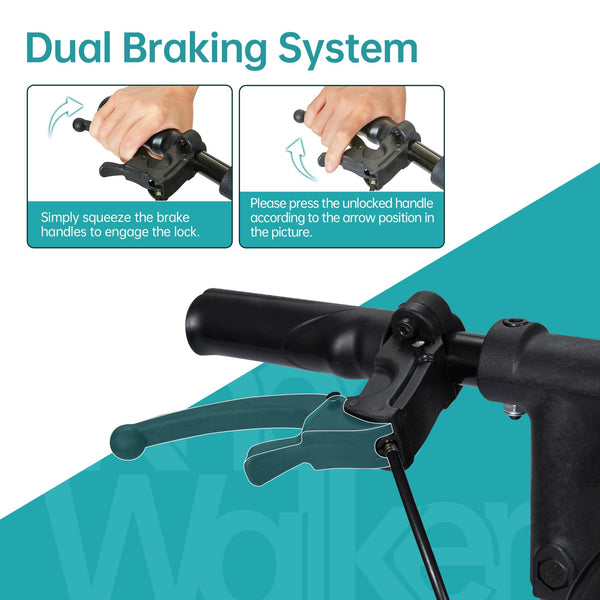
Elenker knee walker with dual braking system
10. Anyone Whose Doctor Says “No”
This one’s obvious, but important. Even if a knee scooter looks comfortable and easy to use, always follow your doctor’s advice. Every injury and recovery plan is different — what works for one person might not work for you.
If your doctor says your leg shouldn’t rest in a bent position, or that your balance needs more support, trust that recommendation. It’s all about healing safely and keeping your mobility as stress-free as possible.
The bottom line is that knee walkers are fantastic for the right person — they make recovery more independent and keep you moving with less effort. But they’re not perfect for everyone.
If you’ve got balance issues, multiple leg injuries, weak arms, or limited space, it’s worth considering other options like a rollator walker, crutches or wheelchair.

Elenker Lightweight Foldable Electric Wheelchair
The best approach? Talk with your doctor or physical therapist before deciding. They’ll help you choose the safest and most comfortable mobility aid for your specific situation.
Recovery is all about staying safe and staying active — and the right device can make that so much easier.


