

Is a Knee Walker (Knee Scooter) Better Than Crutches?
Oct 10, 2025
When you’re dealing with a foot or ankle injury, figuring out how to get around can be a real challenge. Between the pain and the limited mobility, the last thing you want is to struggle with a clunky or uncomfortable mobility aid. So, what do you do? Two popular options are knee walkers (knee scooters) and crutches. But which one’s better for your recovery?
Elenker will break down the pros and cons of each, so you can make an informed decision based on your personal needs, recovery timeline and lifestyle.
Knee Walker vs. Crutch
Which One’s Easier on Your Body?
When you’re recovering from an injury, comfort is key. You don’t want to feel like your mobility aid is adding to your discomfort — you want something that helps you feel more mobile without making things worse.
(1) Knee Walker: If you’re looking for a mobility aid that’s gentle on your arms and hands, a knee walker is the way to go. You rest your injured leg on a padded platform, and you roll around on four wheels. That means you’re not putting any weight on your foot, which reduces the strain on your body. Your hands and wrists get a break, too, because you’re not constantly lifting yourself up or supporting your full weight.

Elenker MT-9251 knee walker with 10" wheels
(2) Crutches: Crutches, on the other hand, require you to put all of your body weight on your arms and under your armpits. While they’re effective in certain situations, they can become uncomfortable very quickly. If you’re using them for an extended period, you might experience sore arms, aching wrists, and even bruising or chafing under your arms.
Verdict: If you want comfort, especially for longer periods of use, knee walkers are usually the better choice.
Which One’s More User-Friendly?
You’ve got an injury, so the last thing you want is to struggle with your mobility aid. Whether you’re navigating your house, running errands, or just moving around, you need something that’s easy to use and gets you where you need to go.
(1) Knee Walker: Knee walkers are incredibly user-friendly. You simply rest your injured leg on the platform and push with your good leg. Most knee walkers are designed with smooth steering and easy braking systems, making them a breeze to maneuver on flat surfaces. Indoors, you can glide around easily and move from room to room without much effort.
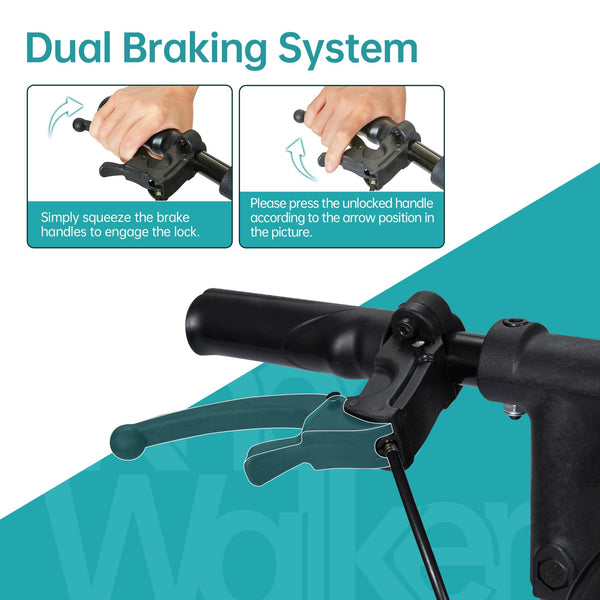
Elenker knee walker with dual braking system
(2) Crutches: While crutches are relatively easy to use once you get the hang of them, they can be exhausting over time. You have to keep lifting them with each step, which can wear you out. Plus, maneuvering through doorways, small spaces, and tight corners can be tricky. You also have to rely on your upper body strength to balance and move forward, which is a lot to manage when you’re healing.
Verdict: If you’re looking for ease of movement and less fatigue, knee walkers win hands down.
Which One Offers Better Balance?
Having the right level of stability is essential, especially when you’re recovering from an injury. You don’t want to risk further injury by losing your balance or having your mobility aid tip over.
(1) Knee Walker: Knee walkers are generally more stable than crutches. Since you’re standing on both legs (one on the platform, one on the ground), you get better balance. The four wheels provide smooth movement, and many knee walkers come with built-in brakes, so you can control your speed and stop safely.
(2) Crutches: Crutches are less stable because you’re balancing on one leg while lifting and moving the crutches. While they can offer good support for short distances, using them over longer periods or on uneven surfaces can increase your risk of losing balance or tripping.
Verdict: For stability and reducing the risk of falls, knee walkers are generally safer, especially on flat surfaces.
Which One Helps You Move Faster?
When you’re trying to get from point A to point B, speed matters. You don’t want to spend more time and energy than necessary getting around.
(1) Knee Walker: With a knee walker, you can glide around much faster than on crutches, especially on smooth, flat surfaces. Whether you’re inside your home or moving between rooms, you’ll notice that a knee walker lets you get around much more quickly without straining your arms. The wheels make it easier to cover distance without having to lift or hop.
(2) Crutches: Crutches are slower because you have to lift and move them with every step. Moving fast isn’t easy, and if you need to get somewhere quickly, crutches can make you tired in a hurry. Plus, you’re relying on your arms to push your body forward, which can be tiring over long distances.
Verdict: Knee walkers make getting around much faster and easier compared to crutches.
Which One Works Better for Different Environments?
Your lifestyle and environment play a big role in choosing the right mobility aid. If you’re outdoors a lot or need something that works in a variety of settings, you’ll want to know how each option holds up.
(1) Knee Walker: While knee walkers are fantastic on smooth, flat surfaces, they’re not always ideal for stairs, uneven ground, or rough terrain. Some knee walkers, however, come with all-terrain wheels that work better on grass or gravel, but even those aren’t perfect for steep slopes or stairs.

(2) Crutches: Crutches are more versatile in this area. They’re better for stairs or uneven ground because you can lift them up as you go. They also work well in places with narrow spaces, like crowded hallways or small rooms, where knee walkers might be a bit cumbersome.
Verdict: If you need something for stairs or rougher environments, crutches might be the way to go. But if you’re mostly indoors, knee walkers are perfect.
Which One’s Better for Long-Term Use?
Recovery isn’t always quick, and sometimes you need something that’s comfortable and reliable for weeks or even months.
(1) Knee Walker: For longer recovery periods, knee walkers are usually the better option. They allow you to move freely without putting strain on your arms and upper body. Plus, they provide more stability and comfort over time, which is a huge bonus if you’re stuck with an injury for a while.
(2) Crutches: While crutches are fine for short-term use, long-term use can lead to discomfort, fatigue, and even muscle strain in your arms. If you’re on crutches for several weeks, you might experience pain or irritation, especially in your wrists or armpits.
Verdict: For long-term use, knee walkers generally offer more comfort and are easier on your body.
So, knee walker vs. crutches, which is better? It really comes down to your specific needs. If you want comfort, speed and stability, and you’re mostly on flat surfaces, a knee walker is a great choice. It’s easy to use, helps you move faster, and reduces strain on your arms.
On the other hand, if you need something that works on uneven terrain or stairs, or if you need a quick and simple mobility aid for a short time, crutches might be a better fit. They’re versatile and perfect for navigating tricky areas, but they can be hard on your body if used for extended periods.
In the end, both have their advantages and drawbacks, so it’s best to consult with your doctor or physical therapist to figure out which one suits your recovery process the best.
You might be interested in the article: Elenker's Guide to Choosing Walkers


