

Can Children Use a Knee Walker?
Oct 13, 2025
Injuries happen, and when a child twists an ankle or breaks a foot, suddenly even walking across the living room can feel like an obstacle course. Crutches can be awkward, hopping is tiring, and carrying a child everywhere just isn’t practical. Enter the knee walker — a mobility aid that helps kids move around without putting weight on an injured leg. But can it really work for children? Let’s take a closer look.
When a Knee Walker Can Help
Knee walkers shine for injuries below the knee, like a foot fracture, toe injury, bunion surgery, or an ankle sprain. They work by letting the injured leg rest on a padded platform while the other leg does the pushing. This setup keeps the injured limb off the ground, so kids can move around safely without the strain of hopping or struggling with crutches.
Imagine a teen who just had foot surgery. Instead of being confined to the couch, they can roll around the house, go to school, or even hang out with friends — all while keeping their leg safe and supported. That little bit of mobility makes a huge difference in independence and mood.

Size, Age and Coordination Are Key
Knee walkers are mainly designed for adults, which means not every child can use one safely. For a child to make good use of a knee walker, a few factors matter:
(1) Height: They need to reach the handlebars comfortably without slouching.
(2) Leg length: The padded platform should support the injured leg at the right angle.
(3) Coordination: Steering, braking, and stopping require some balance and control.
Smaller children might not fit properly, which could lead to tipping over or putting stress on the wrong part of the leg. That’s why this isn’t a device for toddlers or very young kids.
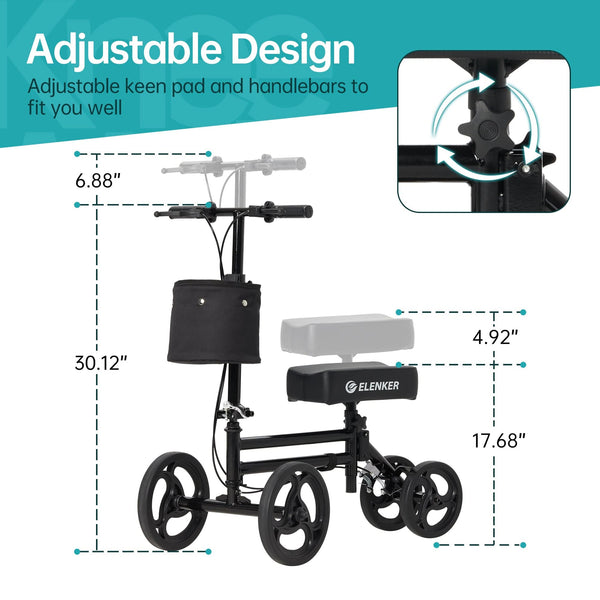
Elenker knee scooter walker with adjustable design
Keeping It Safe
Even if a child is the right size, safety is crucial. Here are some practical tips:
Supervision is a must: Flat, smooth surfaces are ideal. Avoid stairs, uneven sidewalks and steep slopes.
Brake check: Kids should always lock the brakes when stopping, picking something up, or sitting down.
Height adjustment: Hips should stay level, and the injured leg should rest comfortably on the pad.
Practice indoors: Start in a controlled space so they get used to steering and stopping.
A knee walker isn’t a toy. Treating it like a serious mobility device keeps kids safe and helps them build confidence while moving around.
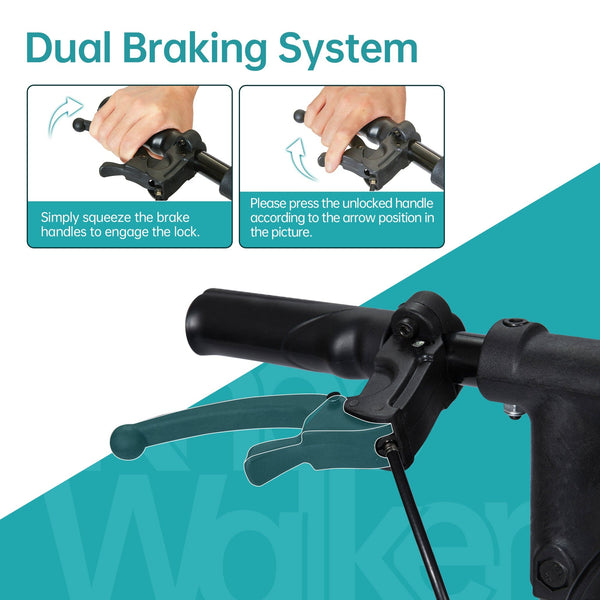
Elenker knee walker with dual braking system
When a Knee Walker Isn’t the Right Choice
Not every child is ready for a knee walker. It might not be suitable if:
(1) The child is too small for the device
(2) Balance or coordination is a challenge
(3) Both legs are injured, making propulsion impossible
In these cases, alternatives like a wheelchair or child-sized crutches are safer and more practical. Pediatricians and physical therapists can guide you toward the right option.
Alternatives for Smaller Children
If a standard knee walker doesn’t fit, there are kid-friendly options:
(1) Child-sized knee scooters: Smaller pads and handlebars designed specifically for children.
(2) Wheelchairs: Ideal for younger kids or injuries affecting both legs.
(3) Child crutches: Shorter, lighter crutches are easier for kids to handle than adult versions.
Picking the right mobility aid depends on the child’s size, age, injury type, and coordination.

Child-sized knee walker
The Benefits of a Knee Walker
When used correctly, a knee walker can make a big difference. Kids can:
(1) Move around without putting weight on the injured leg
(2) Reduce strain on arms and upper body compared to crutches
(3) Stay independent — get to school, play with friends, or help around the house
(4) Boost confidence during recovery, which makes healing less frustrating
Parents also benefit. Instead of carrying a child everywhere or constantly supervising hopping attempts, the knee walker lets kids handle some of their own mobility safely.
Making Daily Life Easier
Using a knee walker in everyday life takes a little planning:
(1) Indoor practice first: Carpets, furniture, and doorways can be tricky to navigate.
(2) Teach stopping safely: Lock the brakes whenever the child needs to pause.
(3) Clear paths: Remove cords, toys, and other obstacles that could cause tripping.
(4) Encourage breaks: Even though it’s easier than hopping, pushing with one leg can get tiring.
These small steps help children feel comfortable and confident on the device, which makes recovery smoother.
Get the Green Light
Before letting a child use a knee walker, check with a pediatrician or physical therapist. They can:
(1) Confirm the child’s injury is suitable
(2) Adjust the walker for proper height and comfort
(3) Teach safe usage techniques
(4) Recommend alternatives if necessary
Professional guidance ensures the child stays safe while getting the most benefit from the device.
To sum up, knee walkers can work for children with below-the-knee injuries on one leg, but age, size, and coordination are key. Supervision and proper setup are essential, and alternatives like child-sized scooters or wheelchairs may be better for smaller kids or more complex injuries.


