

What Diseases Commonly Require a Rollator Walker?
Apr 17, 2025
Getting around isn’t always easy when your body’s not on the same page. Whether it’s a long-term health issue or something that’s just recently popped up, walking can become a serious challenge. That’s where a rollator walker steps in. These handy little lifesavers are more than just mobility aids - they’re freedom providers.
If you (or someone you care about) is wondering, “Do I need one of these?” - this guide will break down some of the most common medical conditions where a rollator walker, especially one with a seat or other cool features, can really make a difference.
Neurological Disorders
Diseases that mess with your brain, nerves, or spine often end up affecting how you walk. A rollator walker can give you back some control.
1. Parkinson’s Disease
With Parkinson’s, balance is a big issue, and sometimes your feet just… don’t cooperate. An upright rollator walker can help keep you steady and improve posture. Some people even love ones with seats so they can stop and rest when those “freezing” moments hit.
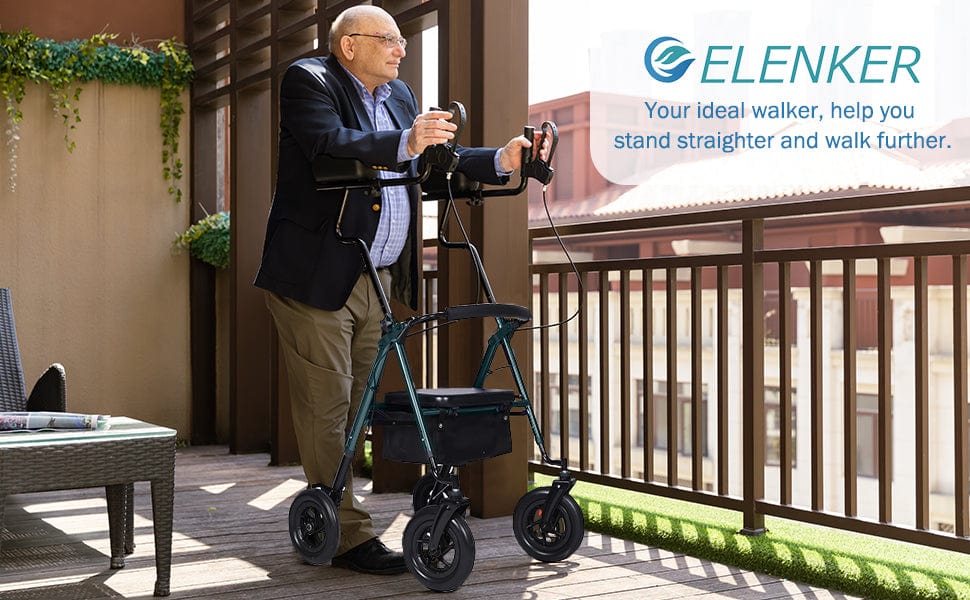
HFK-9236T4 ELENKER Upright Rollator Walker 10" Green
2. Multiple Sclerosis (MS)
MS can cause sudden weakness, muscle stiffness, or fatigue. Having a rollator walker with seat and basket is perfect—sit when you need a break, and store your water bottle or meds in the basket. No need to carry stuff in your hands.
3. Stroke Recovery
After a stroke, walking might be hard on one side of the body. A rollator walker offers support while you regain strength and coordination. The seat is super helpful if you’re doing rehab exercises or going for walks to rebuild muscle.
4. Peripheral Neuropathy
If you’ve got numbness or tingling in your feet (often caused by diabetes), walking feels weird and unstable. That’s when a rollator walker helps keep you upright and confident.
Joint and Bone Problems
A lot of folks turn to rollators when their bones or joints are acting up. Whether it’s arthritis or an old injury, walking with pain isn’t ideal.
5. Osteoarthritis
Arthritis in the knees, hips, or spine can make every step feel like a chore. An Elenker rollator walker with seat lets you stop and sit whenever your joints need a break.
Refer to article: Can a Rollator Walker Help with Osteoarthritis?
6. Rheumatoid Arthritis
Unlike osteoarthritis, RA can cause flare-ups all over the body. On those rough days, a lightweight rollator walker makes moving easier without stressing your joints even more.

Rheumatoid Arthritis
7. Spinal Stenosis
When your spinal canal narrows, it can lead to pain, numbness, and weakness. Bending forward might feel better, which is why many love upright rollator walkers—they keep your posture natural while still giving support.
Heart and Lung Conditions
Yes, even heart and breathing problems can make a rollator walker necessary. Why? Because you might get tired easily or need to stop often.
8. COPD (Chronic Obstructive Pulmonary Disease)
Shortness of breath is no joke. A rollator walker with seat and basket is ideal—you can sit, catch your breath, and keep going. Plus, it lets you carry an oxygen tank or water without holding it.

Chronic Obstructive Pulmonary Disease
9. Congestive Heart Failure
Fatigue comes fast with CHF. An electric rollator walker (yes, they exist!) can even help you move forward with a little power assist, so you don’t have to push as hard.
10. Pulmonary Fibrosis
This lung disease often causes exhaustion and breathlessness. A rollator helps manage those longer walks, whether it’s just to the kitchen or outside for some air.
Diabetes and Metabolic Conditions
If you’ve got diabetes or another condition that messes with your nerves or circulation, a rollator can seriously cut down your fall risk.
11. Diabetic Neuropathy
Foot pain, tingling, or numbness can sneak up on you with diabetes. A rollator walker gives you peace of mind and helps you stay steady on your feet.
12. Obesity or Metabolic Syndrome
Carrying extra weight can strain the joints and cause fatigue. A rollator walker with seat lets you take breaks, especially if you’re trying to build up stamina and exercise more.
Autoimmune & Chronic Fatigue Conditions
If your immune system is fighting itself—or if you’re just tired all the time—a rollator can help you get back to moving without totally wiping you out.
13. Lupus
This condition can affect your joints, muscles, and energy levels. A rollator walker with seat and basket is a lifesaver on flare-up days.
14. Fibromyalgia
When everything hurts and energy is low, walking unaided is hard. A rollator supports your body and lets you stop when you need to without having to find a chair.
15. Chronic Fatigue Syndrome (ME/CFS)
Even short walks can feel like a marathon. A lightweight rollator walker helps pace your energy, so you don’t overdo it.

Aging-Related Frailty and Balance Loss
Sometimes, there’s no specific disease—just the natural wear and tear of aging. And that’s totally okay.
16. Sarcopenia (Age-Related Muscle Loss)
As we age, our muscles shrink, and balance becomes trickier. A rollator walker helps you move with confidence again.
17. Frequent Falls or Dizziness
Even without a diagnosis, if you’ve had a couple of falls or find yourself reaching for furniture while walking, that’s a sign it’s time for something like an Elenker upright rollator walker.

Let’s Talk About Features
Not all rollators are built the same! Depending on your needs, you might want:
1. A rollator walker with seat – to rest on the go.
2. One with a basket – to carry your things without a backpack.
3. An upright rollator walker – for better posture and less back pain.
4. Even an electric rollator walker – for that extra push when your energy is low.
And brands like Elenker offer a wide variety of styles, so you can find something that fits your life—not the other way around.
Whether it’s a condition like Parkinson’s, COPD, arthritis, or just aging in general, the truth is: a rollator walker can be a total game-enhancer (see what I did there?). It’s about independence, safety, and getting through your day without feeling totally drained.
So, if walking is starting to feel more stressful than it should, don’t wait. Try out a rollator walker with seat and basket, or check out something like the Elenker upright rollator walker. You might be surprised just how much easier life feels with a little support.


