

How to Choose the Best Rollator Walker with Seat for Seniors
Apr 21, 2026
A rollator walker with seat might look like a simple walking aid, but for many seniors it quietly becomes part of everyday life. It’s not just about getting from one place to another. It’s about feeling steady while walking, having a place to sit when tired, and keeping daily routines going without extra stress.
As people get older, walking often takes more energy than before. Even short trips around the house or a walk outside can feel tiring. That’s exactly where a rollator walker with seat steps in—it supports movement while also offering rest whenever needed.
Why a rollator walker with seat matters for seniors
For seniors, mobility isn’t just physical movement. It’s independence. Being able to walk safely, pause when needed, and continue without fear of falling makes a huge difference in daily confidence.
According to the National Institute on Aging, using walking aids correctly can help older adults stay active longer and reduce the risk of falls (https://www.nia.nih.gov/health/falls-and-falls-prevention/falls-and-fractures-older-adults-causes-and-prevention). That’s important because falls are one of the most common causes of injury among seniors.
A rollator walker with seat supports that idea in a simple way: it allows walking at a comfortable pace with a built-in resting option whenever the body needs it.
A rollator walker with seat really helps seniors maintain independence.
Stability is what seniors should feel first
When a senior puts weight on a walker, the first impression should always be “this feels steady.” Not shaky, not uncertain—just stable.
A well-built rollator should hold firm when walking and especially when sitting down. The brakes play a big role here because they keep the walker locked in place when needed.
The Mayo Clinic points out that proper walker stability and correct use of brakes are essential for preventing falls in older adults. That matches what many caregivers already notice in real life—most accidents happen when the walker isn’t properly secured.
For seniors, this stability is not just comfort. It’s peace of mind during every step.
Seat comfort becomes part of daily routine
The seat is not something extra—it often becomes the reason the walker is used comfortably for longer periods.
A good seat should feel supportive enough to sit on without discomfort. Seniors often use it for short rests during walks, waiting in lines, or pausing while doing small errands.
Seat height also matters more than expected. If it’s too low, standing back up takes extra effort. If it’s too high, sitting down can feel unstable. The right balance helps the body move naturally without strain.
A backrest adds another layer of comfort. Even a simple padded support helps seniors relax during rest breaks instead of feeling tense.
An adjustable seat helps you sit at the right height comfortably.
Wheel design affects confidence outdoors
For many seniors, walking isn’t limited to indoors. Going outside for fresh air, shopping, or light exercise is part of staying active.
Wheel size and material decide how smooth that experience feels.
Smaller wheels are easier indoors, but larger wheels handle sidewalks, small bumps, and outdoor paths more comfortably. Rubber wheels also help reduce vibration, which means less pressure on wrists and shoulders during longer walks.
This difference becomes noticeable quickly—especially for seniors who rely on the walker for daily outdoor movement.

10" front and 8" rear PVC wheels for smooth performance on various terrains. (Elenker HFK-9240)
Handle height helps protect posture
Something as simple as handle height can change how safe and comfortable walking feels.
When the height is correct, seniors can walk upright with arms slightly bent. This reduces pressure on the shoulders and back. If the handles are too low, it often leads to leaning forward, which can cause fatigue over time.
Good posture isn’t just about comfort—it helps maintain balance and reduces strain during longer use.

Elenker upright walkers with seats are great for maintaining an upright posture.
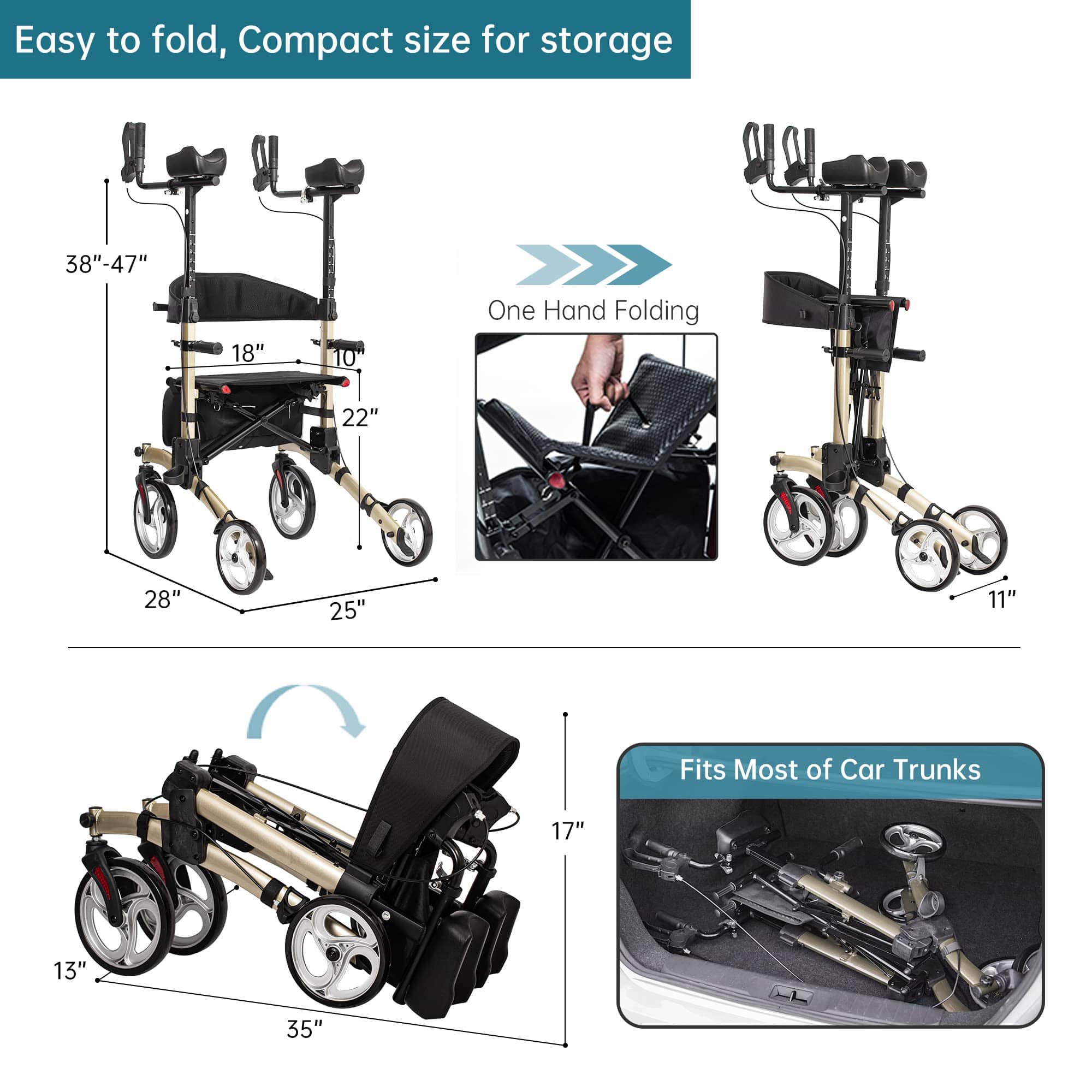
Folding design makes daily use easier
For seniors, convenience often matters just as much as support.
A rollator walker should fold easily so it can be stored at home or placed in a car without difficulty. If folding feels complicated or heavy, it becomes less likely to be used regularly.
Lightweight frames help reduce effort, especially when lifting or repositioning the walker. But even more important is whether the walker feels stable once unfolded again.
Ease of use plays a big role in whether the walker becomes part of daily life or just something stored in a corner.
Why seniors benefit most from rollator walkers
Seniors experience natural changes in balance, muscle strength, and endurance over time. A rollator walker with seat helps manage those changes in a very practical way.
Instead of pushing through fatigue, seniors can walk at their own pace and take breaks whenever needed. That reduces pressure on the body and makes daily movement feel more manageable.
It also supports confidence. Many seniors feel more comfortable going out when they know they can sit down anytime without searching for a bench or chair.
A closer look at Elenker in senior mobility
In the mobility space, Elenker has become a familiar name among rollator walker options designed for seniors. Our models often focus on practical features like foldability, lightweight frames, and comfortable seating for resting during walks.
What stands out is the emphasis on everyday usability rather than overly complex design. For seniors, that simplicity often makes the difference between a tool that’s used daily and one that isn’t.
Putting everything into perspective
Choosing the best rollator walker with seat for seniors isn’t about picking the most advanced model. It’s about finding something that feels safe, comfortable, and easy to use in real daily situations.
Stability builds trust. A good seat supports rest. Proper wheels make movement smoother. And simple folding keeps everything practical at home or outside.
When all these pieces work together, walking becomes less stressful and more natural again—helping seniors stay active with more confidence in their daily routine.


