

How Long Can Someone Sit on the Rollator Walker Seat?
Oct 17, 2025
For many seniors, staying active is important, but sometimes even a short walk can be tiring. That’s where a rollator walker with a built-in seat becomes a handy companion. It lets you take a break, catch your breath, and continue moving without having to hunt for a chair. But a common question pops up: how long can you actually sit on that seat safely?
1. Short Breaks Are the Goal if There Is No Backrest
The rollator seat isn’t meant to replace a chair at home. It’s built for quick rests during movement — think five to fifteen minutes at most if there is no backrest. That’s usually enough time to recover your energy before getting back on your feet.
If you’re sitting longer than that on a regular basis, it might be better to find a proper chair with more support for your back and legs.
2. Mind the Weight Limit
Every rollator has a weight capacity, which is usually printed on the product or listed in the manual. Common ranges are 250–350 lbs (113–159 kg).
(1) Sitting on the seat above the weight limit can strain the frame and even cause accidents.
(2) Even if the rollator doesn’t break immediately, overloading it repeatedly can weaken its structure over time.
Knowing your rollator’s limits helps you avoid mishaps and makes it last longer.

Elenker YF-9007A heavy duty rollator walker 10" wheels suppport up to 500 lbs
3. Comfort Matters
Some rollator seats are padded, while others are simple mesh or hard plastic. Your comfort level will affect how long you can sit:
(1) Padded seats: Usually allow slightly longer sitting since they reduce pressure points.

Elenker rollator walker with sponge padded seat and backrest
(2) Mesh seats: Great for airflow but might feel less cushioned on longer rests.

Elenker rollator walker with mesh seat and adjustable backrest
(3) Hard plastic seats: Should be used mainly for very short breaks.
Also, consider your own body. If you have back issues, joint pain, or circulation problems, even a padded seat might only be comfortable for a few minutes.
4. Always Lock the Brakes
This one is super important. The rollator can move if the brakes aren’t locked, which can lead to falls or injuries. Before sitting:
(1) Engage both brakes fully.
(2) Make sure the rollator is on a flat surface.
(3) Keep your feet planted firmly on the ground for balance.
These small steps make a huge difference in safety.
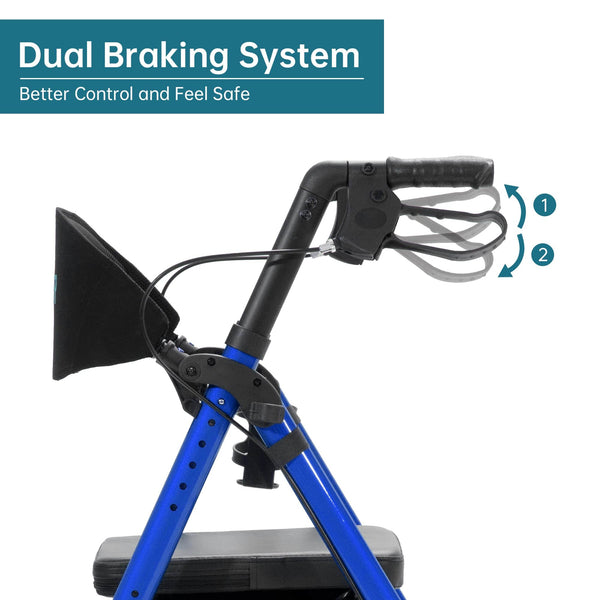
Elenker dual brakes: (1) squeeze to slow down and (2) press down to lock the wheels
5. Posture While Sitting
Even though it’s a short rest, posture still matters:
(1) Sit upright and don’t lean too far forward or sideways.
(2) Keep your feet flat on the floor for stability.
(3) Avoid twisting or reaching while sitting, as this can tip the walker or strain your body.
Good posture reduces the risk of discomfort or accidents during those five to fifteen minutes.
6. Sitting More Frequently, Not Longer
If you find yourself getting tired often, the answer isn’t necessarily sitting longer. It’s about taking more frequent, shorter breaks.
(1) Stop every few minutes rather than sitting for 20–30 minutes at once.
(2) Short breaks help circulation, prevent stiffness, and keep you safe on your rollator.
7. Indoor vs. Outdoor Use
The surface matters, too. On smooth indoor floors, the rollator is more stable, so short sitting periods are safer. On outdoor terrain:
(1) Uneven sidewalks, gravel, or grassy areas require extra caution.
(2) Always check the brakes and the ground before sitting outside.
A tiny bump or slope can make a difference, so always assess the area first.


Elenker HFK-9210KDB all terrain rollator walker 12" wheels for indoor vs. outdoor use
8. Benefits of the Seat
Even though you shouldn’t sit for hours, the seat is still incredibly useful:
(1) Energy boost: Let’s you rest without stopping your walk completely.
(2) Convenience: No need to find a bench or chair.
(3) Confidence: Knowing you can sit anytime encourages you to walk more and stay active.
Many seniors report that simply having the seat available motivates them to take longer walks, run errands, and stay engaged in social activities.
9. When to Consider a Different Seat
If you notice discomfort after just a few minutes, it may be time to look at:
(1) Rollators with padded seats or backrests.
(2) Models with wider or ergonomic seats.
(3) Pairing the rollator with occasional rests in a chair for longer breaks.
It’s all about finding what works for your body while keeping mobility and safety in mind.
While it’s not a substitute for a proper chair, the seat adds a level of independence and comfort that encourages seniors to keep moving — a little boost that makes a big difference in everyday life.


