
How Do You Maintain Proper Posture While Using a Rollator Walker?
Oct 20, 2025
Using a rollator walker can make walking safer and easier, but there’s one thing that often gets overlooked — posture. Whether you’re using it to stay steady, recover from an injury, or just move more confidently, the way you stand and walk with your rollator matters a lot. Good posture helps you stay comfortable, prevent back or shoulder pain, and move smoothly without overworking your body.
If you’ve ever caught yourself hunching forward or leaning too much on your walker, don’t worry — that’s common. The good news is, with a few simple adjustments, you can fix it. Let’s walk through some easy, practical tips for maintaining proper posture while using a rollator walker.
1. Start With the Right Handle Height
Before anything else, check your handle height. It’s the foundation of good posture.
When you stand inside the rollator with your arms resting naturally at your sides, the handles should line up roughly with your wrists. If they’re too low, you’ll bend forward. Too high, and your shoulders will tighten up.
Here’s a simple rule:
When your hands are on the grips, your elbows should bend slightly — about 10–15 degrees.
That small bend helps your shoulders stay relaxed and keeps your back straight while walking. Most rollator walkers, like the Elenker rollator, have easy-to-adjust handles, so take a few minutes to find your perfect height. It’ll make a world of difference.

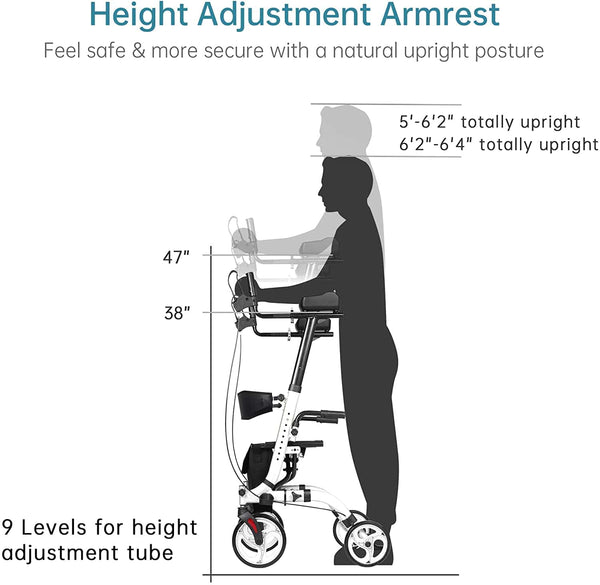
Elenker upright rollator walker, you can adjust height of seat and handle bar, and handgrip lenth and angle
2. Stand Tall and Keep Your Weight Centered
It’s easy to lean too far forward when using a rollator walker, especially if you’re tired or unsure of your balance. But leaning puts pressure on your wrists, shoulders and lower back.
Instead, aim to stand tall with your back straight and your head up. Look forward, not down at your feet. Your body weight should stay between the rear wheels, not leaning over the front.
A good visual trick? Imagine there’s a string gently pulling the top of your head upward. It helps you naturally align your neck and spine without feeling stiff.

Stand tall with your back straight, your head up and keep your weight centered
3. Walk With the Rollator, Not Behind It
This is where many people slip up. The rollator should move with you, not roll ahead while you chase it.
(1) Keep the frame close to your body — about one small step in front.
(2) Walk inside the rollator’s frame, not way behind it.
(3) Let the walker roll smoothly as you step forward, one leg at a time.
If the rollator keeps getting too far ahead, your handle height may be off or your stride too long. Walking naturally with shorter, steady steps keeps your posture upright and balanced.
4. Keep a Light, Comfortable Grip
You don’t need to squeeze the handles like you’re hanging on for dear life. A tight grip tenses your arms, shoulders and neck, which can lead to soreness.
Instead, hold the handles firmly but comfortably. Your hands should guide the rollator, not carry your weight.
If you notice hand fatigue or tingling after walking, try adding padded handle covers or adjusting the height slightly. A small change can make walking feel smoother and more relaxed.
5. Don’t Forget to Engage the Brakes Properly
Good posture also means feeling secure. Before sitting on the seat or standing still for a while, always lock the brakes. It keeps your rollator steady and prevents you from subconsciously leaning or shifting your weight awkwardly.
When you’re ready to sit:
(1) Turn around slowly until the seat touches the back of your legs.
(2) Keep your back straight and your feet shoulder-width apart.
(3) Sit down slowly while holding the handles for balance.
Even when sitting, keeping your spine aligned helps reduce strain on your lower back.

Elenker Dual Brakes System
6. Strengthen Your Core and Shoulders
Strong muscles make it easier to stay upright naturally. You don’t have to hit the gym for this — even small exercises at home help.
Try:
(1) Shoulder rolls to relax tension
(2) Standing leg lifts to improve balance
(3) Gentle core exercises like seated twists or slow marches in place
A stronger core supports your posture automatically while walking with your rollator. Plus, you’ll notice more endurance and less fatigue on longer walks.
7. Check Your Posture Regularly
Good posture isn’t a “set it and forget it” thing. Even when you start out perfectly aligned, it’s easy to drift back into old habits — especially when you’re tired or distracted.
Every few minutes, do a quick self-check:
(1) Are your shoulders relaxed?
(2) Is your back straight?
(3) Are you walking close enough to the rollator?
(4) Is your head facing forward, not down?
These quick reminders help keep your walking form healthy and natural without overthinking it.
8. Pick the Right Type of Rollator for You
Not all rollators are designed the same way, and the right model can really help your posture.
(1) Upright rollator walkers are great if you tend to slouch or lean forward. They have higher handles that encourage standing tall.
(2) Rollator walkers with seats are perfect if you need rest breaks during longer walks — just remember to keep your back straight when sitting.
(3) All-terrain rollators are useful for outdoor activities since they stay stable on uneven surfaces.
Brands like Elenker rollator offer several adjustable and ergonomic options, which help you maintain posture while walking comfortably.
9. Take Breaks and Stretch Often
Even with great posture, walking for long periods can make your muscles stiff. If you start feeling tight in your neck, shoulders, or back, take a quick pause.
(1) Roll your shoulders backward a few times.
(2) Stretch your neck gently from side to side.
(3) Take deep breaths to loosen up your chest.
Small breaks keep your muscles relaxed and prevent strain, especially if you use your rollator for long distances or daily errands.

Take breaks by sitting for a while and stretching
10. Stay Confident and Comfortable
A rollator walker is meant to make your life easier, not awkward. Once you find your rhythm and posture, walking becomes second nature. The goal isn’t to stand perfectly still and stiff — it’s to move naturally while keeping your body aligned and supported.
You’ll notice that as your posture improves, walking feels smoother, your balance gets better, and your body feels less tired. That’s the real benefit of using your rollator the right way — it keeps you mobile, safe, and feeling good.
So, maintaining proper posture with a rollator walker isn’t complicated — it’s all about alignment and awareness. Adjust the height, walk inside the frame, keep your shoulders relaxed, and move at your own pace.
Whether you’re using a rollator walker with seat, an upright rollator walker, or a lightweight Elenker rollator, good posture helps you get the most comfort and confidence from every step.
Keep your head up, your back straight, and your stride steady — your body will thank you for it.


