

How Do I Sit on a Rollator Walker Seat Properly?
Aug 19, 2025
If you use a rollator walker, you probably already know how handy that built-in seat can be. Whether you’re out for a walk, waiting in line or just need a quick break, that seat can feel like a little lifesaver. But here’s the thing: not everyone knows the right way to sit down safely. Done wrong, it can be risky. Done right, it’s a reliable way to rest without worry.
So, how do you actually sit properly on a rollator walker seat?
Why Sitting the Right Way Matters
A rollator walker is designed to support you while walking, but its seat is there for resting, not riding. If you plop down too quickly, sit on uneven ground, or forget to lock the brakes, you’re putting yourself at risk of falls. And trust me, nothing spoils the convenience of a rollator faster than tipping over when you just wanted to take a seat.
Learning the right way to sit keeps you safe and makes your rollator walker more useful in daily life. It’s all about small, simple habits.
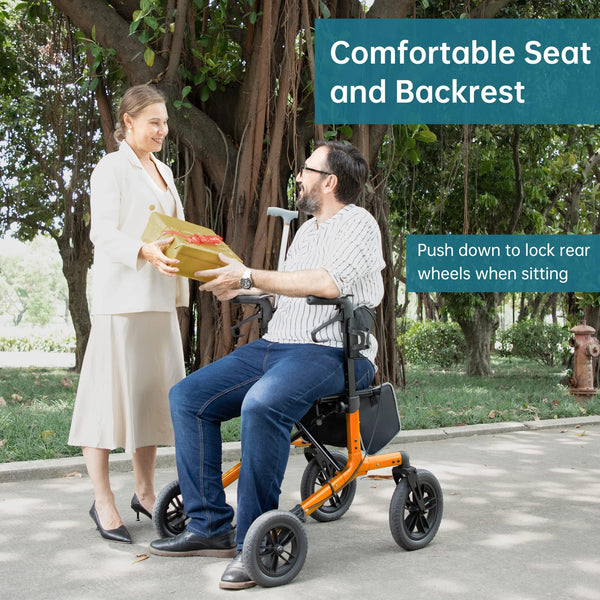
sit on even ground, lock the brakes and sit down slowly (Model: Elenker KLD-9212)
How to Sit on a Rollator Walker Seat
Here’s a simple routine you can follow every single time you want to sit down:
1. Pick the Right Spot
Always look for level ground before you sit. Smooth floors indoors, flat sidewalks or even asphalt driveways are usually fine. Avoid grass, gravel, slanted curbs or anything bumpy. The flatter the surface, the safer your rollator will be.
2. Lock the Brakes
This is the big one. Before you even think about turning around to sit, lock those brakes. Push down or squeeze the handles (depending on your rollator model) until the wheels won’t move. A rollator is light, and if it slips even a few inches while you’re sitting, it can throw you off balance.
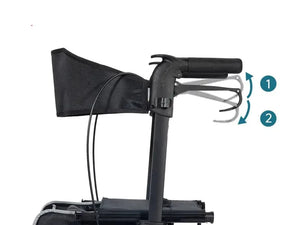
Dual Brakes: (1) squeeze to slow down and (2) press down to lock the wheels
3. Turn and Back Up
Instead of trying to step over the frame or twist awkwardly, just turn around so your back faces the seat. Back up slowly until the back of your legs touch the edge of the seat. That little “bump” against your legs is your signal that you’re in the right place.
4. Hold On Tight
Keep at least one hand on the rollator’s handles for balance. Many people try to sit without holding on, and that’s when things can get wobbly. Your rollator is designed to give you support — so use it.

The sit-to-stand handle helps you sit down and stand up easily
5. Sit Slowly, Don’t Plop
Bend your knees, lean back slightly, and lower yourself gently into the seat. Think “slow and controlled” instead of “fast and sudden.” Plopping down can jolt the rollator, and on uneven surfaces, it might even tip.
6. Keep Your Feet on the Ground
Once you’re seated, place your feet flat on the floor. Never rest them on the wheels or let them dangle. Keeping your feet grounded helps keep the walker stable and prevents it from rolling.

Place your feet flat on the floor, don't let them dangle (Model: Elenker HFK-9236T4)
7. Stay Centered and Upright
Sit in the middle of the seat with your back against the backrest (if your rollator has one). Try not to lean too far forward or sideways — the more centered you are, the safer you’ll be.
Tips to Make Sitting Easier
Sitting on a rollator walker might feel awkward at first, but a few little tricks can make the process smoother:
(1) Practice indoors first: If you’re new to using a rollator, practice sitting and standing in a safe place, like your living room.
(2) Add a backrest if you don’t have one: Many rollator walkers come with a simple bar for back support. If yours doesn’t, you can usually add one for extra comfort and safety.
(3) Wear supportive shoes: Good shoes make it easier to keep your feet flat and steady when sitting down.
(4) Don’t rush: Whether you’re in a store or outdoors, don’t let impatience make you skip steps. Safe sitting is always worth those extra few seconds.
How to Stand Up Safely from the Seat
Getting back up is just as important as sitting down. Here’s the safe way to do it:
(1) Scoot forward until your feet are flat on the ground and slightly behind your knees.
(2) Keep your hands on the handles — they’re there to help you push up.
(3) Unlock the brakes only after you’re standing — never before.
(4) Stand slowly using your legs and arms together, then steady yourself before moving forward.

The sit-to-stand handles on upright rollator walker helps you stand up easier
Surfaces You Can and Can’t Sit On
Sometimes the biggest mistake isn’t how you sit, but where you sit. Here’s a quick cheat sheet:
Safe surfaces
(1) Indoor floors (wood, tile, carpet)
(2) Flat sidewalks
(3) Smooth driveways
(4) Even outdoor patios
Unsafe surfaces
(1) Grass or dirt (soft ground can make wheels sink)
(2) Gravel or stones (too unstable)
(3) Slopes or hills (brakes may not hold)
(4) Uneven curbs
When in doubt, skip the rollator seat and find a bench or chair nearby.
A rollator walker with a seat is a fantastic tool for staying mobile and independent, but it only works well if you use it correctly. Sitting properly is all about three simple habits: level ground, locked brakes and slow movements. Master those, and you’ll have a safe and reliable resting spot wherever you go.


