

How Do I Safely Sit on the Seat of a Rollator Walker?
Aug 12, 2025
If you use a rollator walker with a seat, you probably already know how handy that little built-in seat can be. Whether you’re taking a break on a walk, waiting in line, or just need a moment to catch your breath, that seat can be a real lifesaver. But sitting on it safely? That’s a different story.
Pulling off a smooth and safe sit-down on your rollator seat isn’t complicated, but it’s something worth knowing how to do right. This guide will walk you through it step-by-step, with simple tips to keep you steady and avoid any accidents. Let’s get into it.
Why Sitting On Rollators Safely Matters
First things first: the seat on your rollator is meant for short rests. It’s not a recliner or a lazy chair - so you want to treat it with a bit of respect. Sitting down the wrong way or on unstable ground can cause you to tip over or slip, which is something we definitely want to avoid.
The good news? With a little bit of care and these simple steps, sitting down and getting up from your rollator seat can be easy and safe. It’s all about knowing how to position yourself, how to use the brakes and how to keep your balance.
How to sit down and stand up from Elenker upright rollator walker MT-8151
Step 1: Find the Right Spot to Sit
Before anything else, make sure you’re parked somewhere safe. This means:
Flat, stable ground: Avoid uneven or sloped surfaces like hillsides, rocky patches, or soft dirt. Your rollator works best on solid, level flooring like pavement, tile, or packed earth.
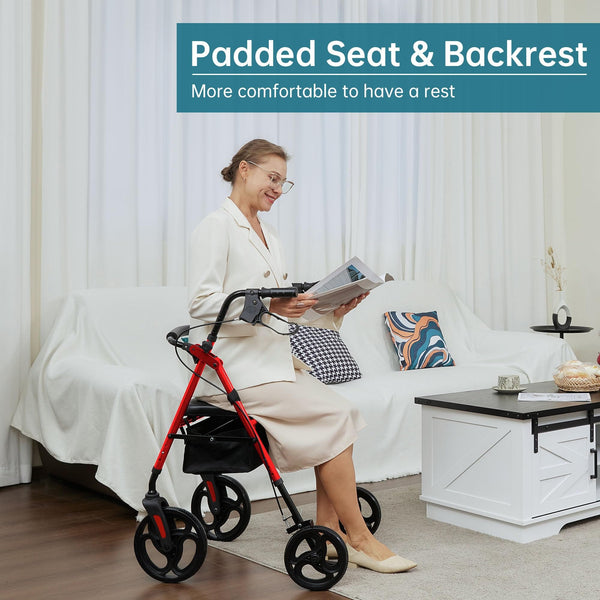
Find a flat, stable ground to sit (Elenker YF-9007B Rollator Walker 10" Wheels)
Enough space: You want room to turn yourself around comfortably without bumping into walls, furniture, or other obstacles.
Pro tip: If you’re indoors, pick a spot where the floor isn’t slippery or wet.
Step 2: Lock Those Brakes
This one’s crucial. You want your rollator to stay put when you sit down, so:
(1) Use the brake locks to firmly hold the wheels in place.
(2) Test by gently pushing the rollator forward and backward to make sure it’s locked and won’t roll.
Think of this like parking your car before getting out - you want that rollator to stay exactly where you left it.
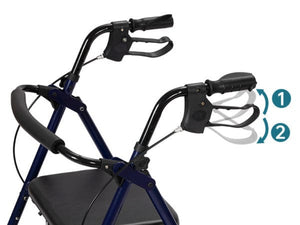
Dual Brakes: (1) squeeze to slow down and (2) press down to lock the wheels
Step 3: Approach the Seat Calmly and Hold On
Now, walk up to the seat from the front or side. Keep your hands on the rollator handles so you have something steady to hold on to. Don’t rush it—take your time.
It’s easier to control your balance if you stay close to the rollator while getting ready to sit.

Elenker upright rollator walker have special sit-to-stand handles help you stand up and sit down
Step 4: Turn Yourself Around Slowly
Once you’re facing the seat and holding on tight, turn around carefully so your back is toward the seat. Keep your hands on the handles during this movement to maintain your stability.
If turning is hard, don’t hesitate to ask for a little help from a friend or caregiver.
Step 5: Lower Yourself Gently
With your back to the seat and hands still holding the handles, slowly bend your knees and begin to sit down. Don’t just drop or plop yourself down—take it slow and steady.
Make sure your feet are flat on the ground and your weight is evenly balanced. The rollator seat is usually a bit narrower than a regular chair, so positioning yourself well is key to staying safe.
Step 6: Check Your Position
Once you’re sitting, take a moment to adjust your posture if you need to. Make sure you’re comfortable, your back is straight, and your feet are stable.
Remember, the seat is for short breaks - don’t lean too far back or slouch too much.
Step 7: Getting Up Safely
When you’re ready to get back on your feet, reverse the steps:
(1) Unlock the brakes if your rollator requires it.
(2) Lean slightly forward from the seat.
(3) Use your hands on the handles to push yourself up steadily.
(4) Keep your feet flat and don’t rush the movement.
If you find standing up difficult, consider getting a little help or using a grab bar if one is nearby.

Elenker walker with sit-to-stand handles make stand up from a seated position easier.
Quick Tips for Staying Safe While Using Your Rollator Seat
(1) Don’t sit if the brakes don’t hold well or the seat feels unstable. Fix any mechanical issues first.
(1) Avoid sitting on soft or uneven ground. This could tip your rollator over.
(2) Use the seat only as a resting spot, not as a permanent chair.
(3) If you have balance or strength challenges, ask for help when sitting or standing.
(4) Regularly check your rollator for loose parts or worn brakes. Maintenance keeps you safer.
(5) Wear proper shoes with good grip. Slips can happen when getting up or sitting down.
What to Do If You Feel Unsteady Sitting Down
Sometimes you might feel a little wobbly or unsure when sitting or standing up. If that happens:
(1) Take a deep breath and slow down.
(2) Use your rollator handles to steady yourself.
(3) If possible, have a friend or caregiver nearby.
(4) Consider physical therapy or balance exercises to build confidence.
Using the seat on your rollator walker is a handy way to give yourself a breather during your day. But like anything that helps you stay mobile and independent, it’s important to use it safely.
Keep these steps in mind, park on level ground, lock those brakes, and take your time sitting down and standing up. Your rollator seat is there to help you—not to trip you up.
If you’re new to using a rollator walker with a seat, don’t worry! It gets easier with practice, and a little patience goes a long way.
Stay safe, take it slow, and enjoy the extra comfort your rollator seat brings.


