

How Do I Ensure My Rollator Walker Is Stable While Walking?
Sep 07, 2025
If you’re using a rollator walker with seat, safety and stability are probably top priorities for you. A rollator can be a huge help when it comes to getting around, but it only works well if you’re using it correctly. The good news? Keeping it stable while you walk isn’t complicated - it’s more about paying attention to a few key habits and making sure your rollator is adjusted to your needs.
Quick Comparison: Stable vs. Unstable Habits
Here’s a simple look at habits that keep your rollator steady versus ones that might throw you off balance:
| Stable Habits | Unstable Habits |
|---|---|
| Handles adjusted to wrist height | Handles too high or low |
| Both hands on the handles | Carrying items in one hand |
| Brakes locked before sitting/standing | Sitting without locking brakes |
| Walking inside the frame | Pushing it far ahead of you |
| Even steps at a steady pace | Rushing or taking uneven strides |
| Light loads in the basket | Overloading with heavy bags |
Get the Height Right
One of the most common mistakes people make is not adjusting the handles properly. Here’s a quick check:
(1) Stand upright with your arms relaxed by your sides.
(2) The handles should line up roughly with your wrists.
(3) If they’re too high, you’ll feel like you’re reaching up and won’t have enough control.
(4) If they’re too low, you’ll end up hunching, which isn’t good for your back.

Correct height = better posture + more stability (model: Elenker HFK-9210KDB)
Keep Both Hands on the Walker
This one sounds obvious, but you’d be surprised how often people forget. Always keep both hands on the handles while walking. If you need to carry a bag, use the rollator’s basket, storage pouch, or tray instead of trying to juggle it. Freeing up your hands keeps the walker balanced and gives you full control of the brakes if you need to stop suddenly.
Use the Brakes Wisely
Your brakes are your best friends. Make it a habit to:
(1) Lock the brakes before sitting down on the seat.
(2) Lock them before standing up.
(3) Check that they’re actually holding before you put your weight on the walker.
If your brakes feel loose or don’t grip well, have them adjusted. It’s a simple fix, but it makes a huge difference in safety.
Use rollator walker with seat every day, lock the brakes before sitting down on the seat (model: Elenker MT8151)
Walk Inside the Frame, Not Behind It
Here’s a little trick: picture yourself “walking inside the rollator,” not chasing it from behind. Your body should stay close to the handles, with the rollator moving just slightly ahead of you. If you’re too far back, it may roll ahead and make you feel like you’re losing balance.

Take small, even steps and let the wheels roll smoothly instead of pushing it too hard (model: Elenker YF-9007E)
Choose the Right Surfaces
Rollators are designed mainly for smooth, flat surfaces. If you often walk outside on grass, gravel, or bumpy sidewalks, you might want to look into an all-terrain rollator walker with bigger wheels. The larger tires handle rough ground much better, which means less wobbling and more confidence as you move around.
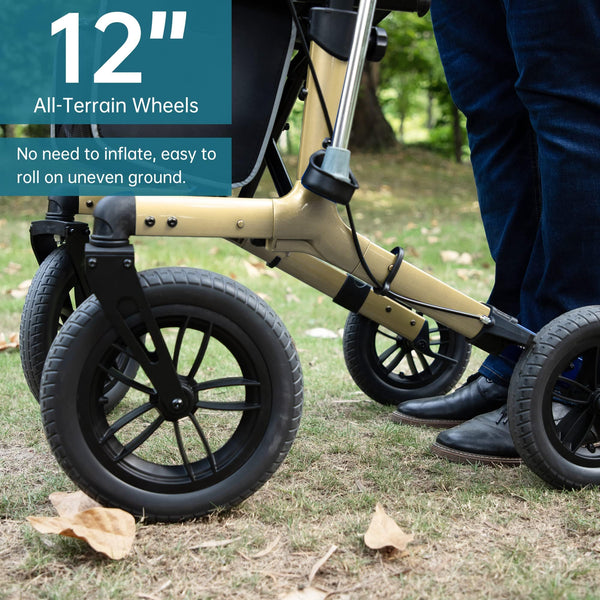
Elenker KLD-9212 rollator walker with 12" all terrain wheels
Do Regular Safety Checks
Think of it like maintaining a car - quick checkups keep things running smoothly. Look over your rollator once in a while:
(1) Are the tires worn down?
(2) Do the wheels spin smoothly, without shaking?
(3) Do the brakes grab firmly when you test them?
(4) Is the frame still tight, with no loose screws or parts?
A five-minute check can save you from a dangerous fall.
Don’t Overload the Walker
Most rollators come with a basket or seat, which is super handy. But it’s important not to overload them. Putting too much weight in the basket or sitting on the seat while carrying heavy items can make the walker unstable. Always stick to the weight limit listed in the manual.

A rollator walker with under-seat basket, cane and cup holder, don't overload
Turn with Care
When you’re turning corners, slow it down. Use small steps and keep the walker’s back wheels grounded. Quick spins or sharp pivots can cause tipping, especially on uneven surfaces. Think of it like steering a shopping cart - you want smooth, controlled turns.
Practice Makes Perfect
If you’re new to using a rollator, don’t be hard on yourself if it feels awkward at first. Like anything else, it gets easier the more you use it. Start with short walks around your home or a flat hallway, then gradually work your way up to longer strolls outside.
Some people even practice in front of a mirror to check their posture and stride—it’s a surprisingly helpful trick.
Keeping your rollator walker stable while walking really comes down to good habits: set it up to fit you, use the brakes, stay inside the frame and check it regularly. With the right adjustments and a little awareness, your rollator becomes more than just a tool - it’s a reliable partner that helps you move with confidence and independence.


