

Do Rollator Walkers Come with Back Support?
Feb 24, 2026
If you're shopping for a rollator walker, you’ve probably wondered whether it includes back support. It sounds like a simple yes-or-no question — but the real answer depends on the type of model you’re considering.
Some rollators are designed purely for mobility. Others are built with rest breaks in mind. And that difference plays a big role in whether back support is included.
Most Rollator Walkers with Seat Include Back Support
If you’re looking at a rollator walker with seat, there’s a strong chance it comes with some kind of backrest. The whole point of adding a seat is to give you a place to rest, and sitting without back support isn’t comfortable for very long.
In many cases, the back support is a padded bar that flips up and down. Some models use a flexible strap-style backrest instead. The strap version keeps the rollator walker lighter and easier to fold, while a padded backrest feels more stable and supportive.
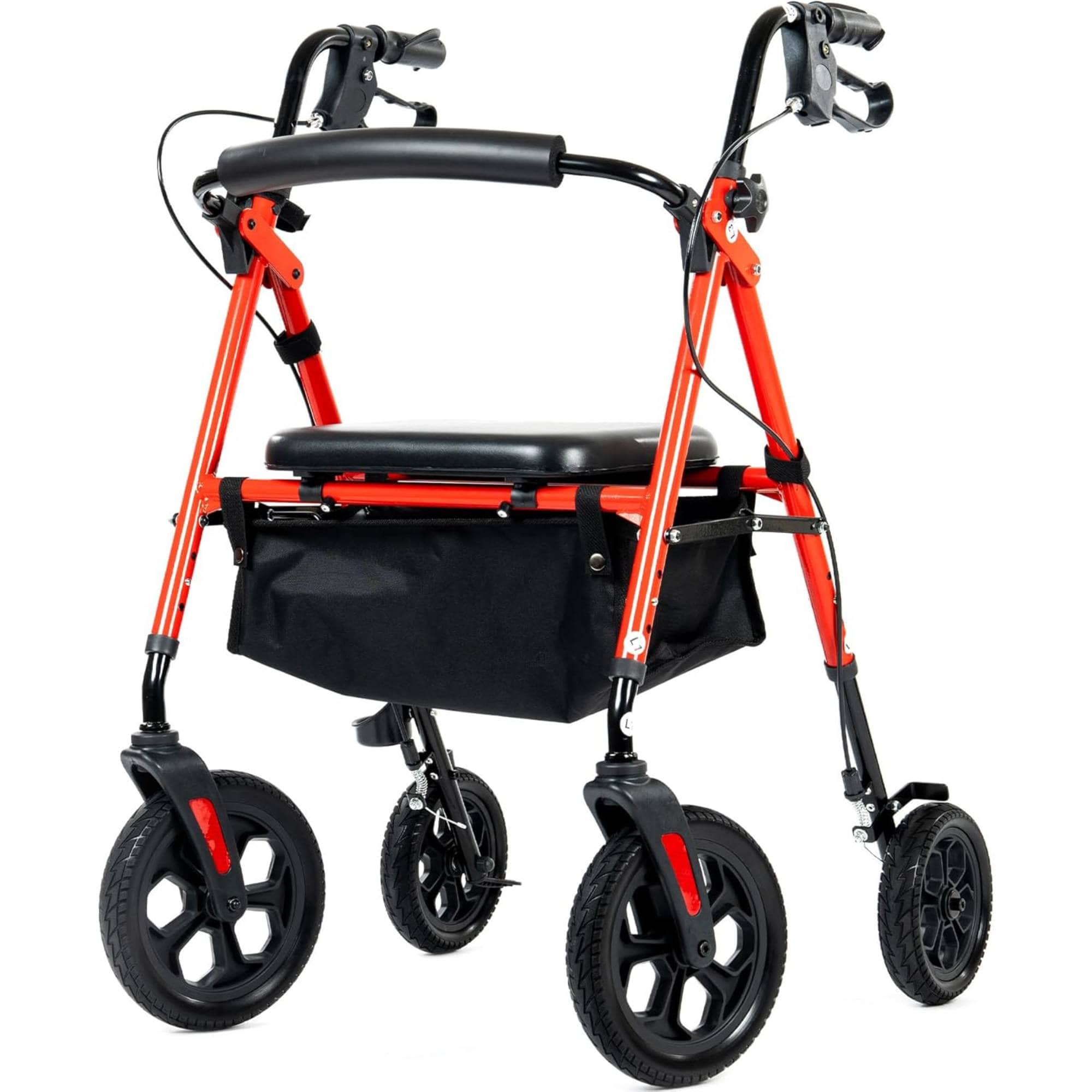
Elenker rollator walker with seat and padded bar
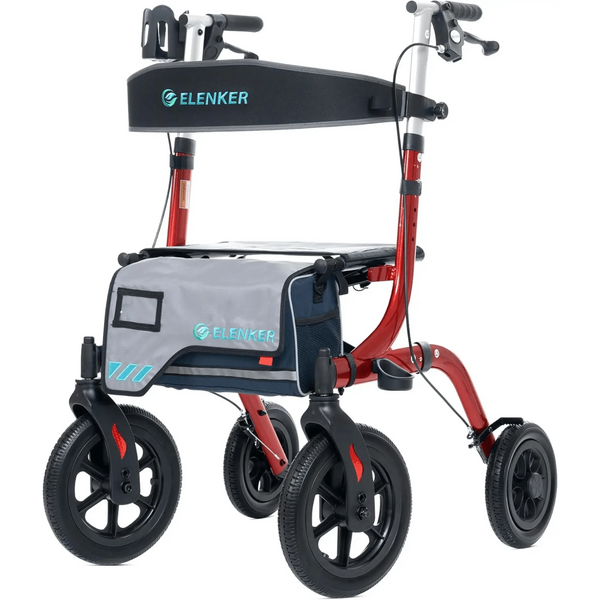
Elenker rollator walker with seat and flexible strap-style backrest
Higher-end rollator walkers with seat may offer wider cushioning that supports more of your lower back. But lightweight or compact travel models sometimes reduce the size of the backrest to keep the overall frame portable.
So while many rollator walkers with seat include back support, the level of comfort varies.
Basic Rollators May Not Have Back Support
Not every rollator walker includes a seat — and if there’s no seat, there’s usually no back support either.
Some basic rollators are designed strictly to help with balance and walking. They’re lightweight, easy to maneuver, and ideal for short indoor use. In those cases, adding a backrest wouldn’t make much sense.

Elenker 3-wheels rollatr walker with no seat and backrest
That’s why it’s important to check whether you’re looking at a standard rollator or a rollator walker with seat. The presence of a seat usually determines whether a backrest is included.
Back Support While Sitting vs. Back Comfort While Walking
There’s another angle to this conversation. Back support while sitting is one thing. Back comfort while walking is something else entirely.
A traditional rollator walker focuses on mobility. You walk holding the handles, and when you get tired, you turn around and sit against the backrest.
But posture during walking can also affect your back — and that’s where an upright rollator walker comes into play.
Upright Rollator Walker and Better Posture
An upright rollator walker is built differently from a standard rollator. Instead of gripping low handles and leaning forward slightly, your forearms rest on higher padded supports. This allows you to stand more upright while walking.
An upright rollator walker helps maintain good posture.
For many users, this design reduces strain on the lower back, shoulders and neck. Over time, walking in a more natural position can make a noticeable difference in comfort.
It’s worth noting that some upright rollator walker models focus primarily on posture and mobility rather than thick seated backrests. Their main advantage is helping you walk taller and reducing back pressure during movement.
So if your discomfort comes mainly from walking posture rather than sitting, an upright rollator walker may help more than simply choosing a rollator walker with a thicker backrest.
Do You Actually Need Back Support?
That depends on how you plan to use your rollator walker.
If you:
• Take frequent outdoor walks
• Wait in lines often
• Need longer seated breaks
Then a rollator walker with seat and a padded backrest makes sense.
If you mostly use your rollator indoors for short distances and rarely sit down, a lighter model without a heavy backrest may be perfectly fine.
And if your back discomfort happens during walking rather than resting, an upright rollator walker might be the better solution.
Sometimes support isn’t about adding more padding — it’s about improving posture.
Comfort Is About the Whole Design
Back support isn’t only about what touches your spine. Seat width, seat height, frame stability and handle positioning all contribute to how supported you feel.
A rollator walker with seat that has a narrow base may feel less secure than a wider, sturdier frame. Meanwhile, an upright rollator walker can improve spinal alignment even if its seat back is minimal.
It really comes down to how you use it in daily life.
So Do Rollators Come with Back Support?
Many do — especially rollator walkers with seat — but not all models include the same level of support.
Basic rollators may not have any backrest.
A rollator walker with seat typically includes one.
An upright rollator walker improves back comfort during walking by helping you stand straighter.
Choosing the right option depends on whether you need support while sitting, relief while walking, or a bit of both.
Once you’re clear on how you’ll use it, picking the right rollator walker becomes much easier.


