

Are Rollators Suitable for Stroke Recovery Patients?
Aug 27, 2025
Recovering from a stroke can be a rollercoaster - some days you feel strong and other days walking across the room feels like a marathon. That’s where a rollator walker can step in to make life a little easier.
Why Stability is a Big Deal
One of the biggest challenges after a stroke is balance. Some people experience weakness on one side, while others may feel unsteady even when standing upright. Rollators are great because they give you something solid to hold onto.
A sturdy frame, a wide base and strong brakes can prevent falls before they happen. For someone recovering from a stroke, that extra support can make walking less stressful—and less scary. And if you get tired mid-walk, the built-in seat gives you a safe spot to rest without having to hunt for a chair.

Elenker heavy duty rollator walker with seat for independence and mobility
Adjustable Features Keep You Comfortable
Not all rollators are made the same, and small differences can make a huge impact. Look for:
Handle height adjustability: You want your arms at a natural angle while walking. Handles that are too high or too low can strain your shoulders and back.
Seat width and padding: Sitting down should feel safe and comfortable, especially if you need frequent breaks.

Elenker YF-9007A heavy duty rollator walker with adjustable seat height, handle bar height, and padded seats and backrest
Wheel size: Larger wheels (like 8–10 inches) roll smoother over rough surfaces or thresholds. Small wheels are fine indoors, but they can get stuck on rugs or uneven pavement.
These features help you feel confident moving around without thinking twice about balance or comfort.
Start With Guidance
Even with a rollator, early stroke recovery isn’t the time to go solo. Physical therapists can show you the safest ways to walk, turn and sit. They’ll also help you find a rollator model that fits your height, weight, and mobility needs.
Some tips therapists often recommend:
Keep your elbows slightly bent while holding the handles.
Take small steps and move at a pace that feels natural.
Always lock the brakes when sitting or standing up from the seat.
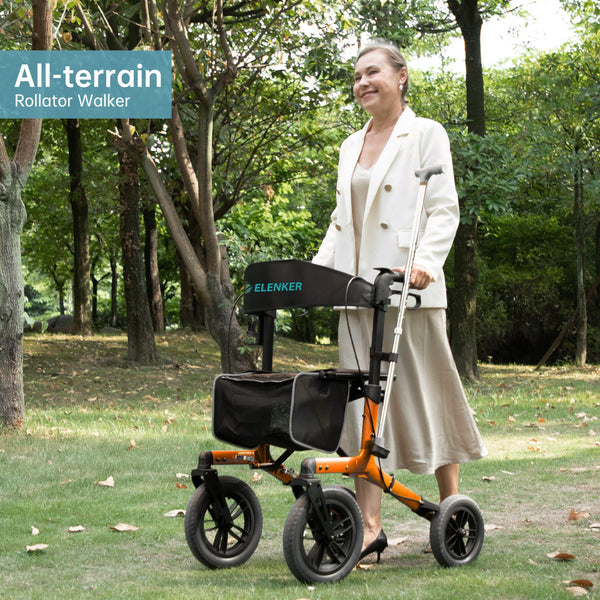
Keep your elbows slightly bent while holding the handles and take small steps (Model: Elenker KLD-9212)
Following these habits helps prevent falls and builds confidence, which is crucial in the recovery phase.
How a Rollator Helps Day-to-Day
Stroke recovery isn’t just about therapy sessions - it’s about moving through life with independence. A good rollator lets you:
Walk longer distances without getting exhausted. Fatigue is common after a stroke, and a rollator gives you extra support when muscles are weak.
Carry items safely. Many models have baskets or pouches, so you don’t have to balance groceries or personal items while walking.
Stay active outdoors. Sidewalks, parks and even short trips outside are easier with a rollator that handles different surfaces.

Elenker YF-9007E all-terrain rollator walker with baskets, pouches, cane and cup holder
When you can move safely on your own, it’s a huge confidence boost, which can make recovery feel less like a struggle.
Possible Challenges
Of course, nothing is perfect. Some considerations for stroke recovery patients include:
Weight and size: Heavy-duty rollators are stable but can be hard to lift or transport.
Doorway clearance: Wider rollators might not fit through narrow doorways.
Learning curve: It can take a few sessions to get used to braking, turning, and sitting safely.
These aren’t deal-breakers - they’re just things to keep in mind when picking a rollator that suits your home and lifestyle.
Picking the Right Rollator
Choosing the right rollator for stroke recovery comes down to your needs. Here are some tips:
Weight capacity: Make sure it supports your body weight comfortably.
Adjustable handles: Comfort is key, so you don’t strain muscles while walking.
Seat comfort: You should be able to rest safely whenever needed.
Wheel size and type: Match your typical walking surfaces—small wheels for indoors, bigger for outdoors.
Extra features: Baskets, trays or pouches can make daily life easier.
The goal isn’t just mobility - it’s freedom and confidence in movement.
When a Rollator Isn’t Enough
While rollators are excellent for many stroke recovery patients, some might still need additional support:
Severe balance issues: If you struggle to hold the rollator upright, consider a walker with more stability or parallel bars during therapy.
Fatigue or cardiovascular concerns: Sometimes a wheelchair might be safer for longer distances, at least temporarily.
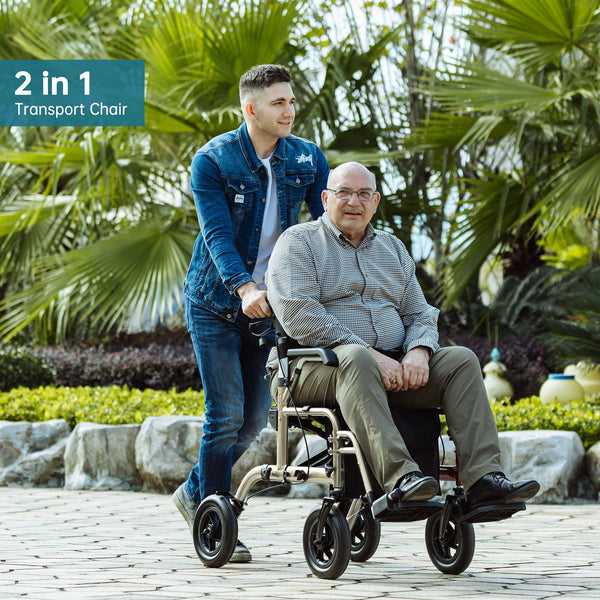
Elenker HFK-9213-5 all terrain 2-in-1 rollator walker transport chair
The right tool depends on your unique situation, and therapists can help you decide what works best.
So rollators are suitable for stroke recovery patients when chosen and used correctly. A rollator provides stability, comfort and independence, letting you focus on getting stronger instead of worrying about falls or fatigue.
When it comes down to it, having the right support under your hands - and a seat when you need a break - makes all the difference in rebuilding confidence and moving through your day safely.


