
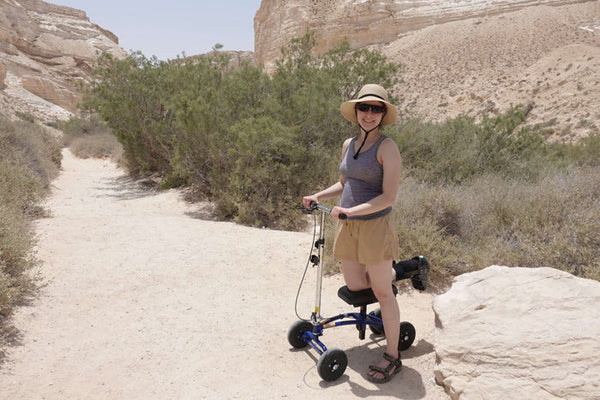
How Do I Navigate Curbs or Bumps with a Knee Walker?
Oct 13, 2025
So you’ve got your knee walker, and it’s been smooth sailing—until you reach that first curb, bump, or uneven surface. Suddenly, it’s not as effortless as gliding through your living room. Don’t worry, though; with the right approach, you can handle curbs and bumps safely and confidently without feeling like you’re navigating an obstacle course.
Slow and Steady Wins Every Time
The first rule of thumb when rolling over anything that’s not perfectly flat? Slow down. Rushing is the fastest way to lose control or risk tipping. Whether you’re moving over a doorway threshold, sidewalk crack, or a small bump in the floor, gentle and steady movements are key. Think of it like driving over a speed bump—you don’t hit the gas; you ease over it.
When you’re approaching a curb or raised surface, keep both hands on the handlebars, maintain a balanced posture, and let your uninjured leg do most of the work. Knee walkers are built for balance, but only if you treat them that way. Sudden pushes or jerky movements can shift your weight too far forward.
Curbs Are Not Your Friends
Here’s the truth: no matter how tempting it is, you should never try to ride a knee walker directly over a curb. They’re too high, and the design of most knee walkers simply isn’t meant for that kind of impact. Trying to hop it or roll down a curb could easily flip the walker forward. That’s an accident waiting to happen.
The safer move? Stop before the curb. Step off the knee walker carefully, keeping your balance on your good leg. Then, either lift the front wheel slightly or roll the walker down slowly, depending on how lightweight your model is. Once it’s stable on the lower level, reposition yourself and get back on. It takes a few extra seconds but saves you from potential falls and damage to your device—or worse, to your healing leg.
The Trick with Bumpy or Uneven Surfaces
Sidewalk cracks, loose tiles, gravel driveways—these are the real tests of patience and control. Bumpy terrain makes your wheels wobble, and that can throw off your balance. The best approach is to keep your movements smooth and consistent. Avoid sudden turns or fast pushes.
Leaning slightly forward (without hunching) can help distribute your weight better. If you’re rolling across light gravel or brick, it’s normal for the walker to shake a little. Keep your grip firm but not tight—you want control, not stiffness. And if it looks too uneven or slippery, there’s no shame in getting off and walking the walker through that area instead.
Why Wheel Type Matters More Than You Think
Not all knee walkers are built for the same environment. If you’re mainly indoors or moving on smooth floors, smaller solid wheels are fine. But if you plan to go outside, especially over sidewalks, grass, or rough pavement, an all-terrain knee walker makes a huge difference.
These models have larger, air-filled tires that can handle bumps and uneven surfaces more comfortably. The ride feels smoother, and you’re less likely to get stuck in cracks or small holes. It’s like the difference between driving a city car and an SUV—both get you where you’re going, but one’s definitely better equipped for rough ground.
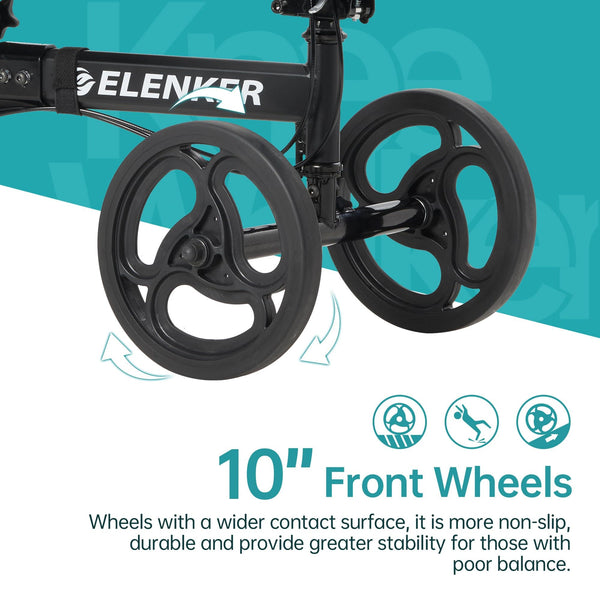
Elenker all terrain knee walker with non-slip 10" front wheels
Look for Ramps Instead of Curbs
If you’re navigating in public areas, keep an eye out for curb cuts or ramps—those little slopes built into sidewalks and crosswalks. They’re your best friend when using a knee walker outdoors. Even small inclines are much safer than sharp drops.
When going up or down a ramp, don’t rush it. Keep your speed low, lean slightly back when going downhill to control your descent, and make sure your hands are ready to brake gently if needed. Going uphill? Use small pushes with your good leg instead of one big shove. It’s all about rhythm and balance.

Look for Ramps Instead of Curbs
Watch Out for Slippery Spots
Smooth floors can be tricky, especially if they’re wet, waxed, or polished. Your tires may not grip as well, and bumps become even riskier. If you’re indoors on tile or wood flooring, make sure your tires are clean and dry. If you’ve been outside in the rain, wipe them down before heading inside.
A simple rubber mat near entryways can help prevent slipping when you transition between surfaces. Also, check your tires regularly—if they’re worn down, replace them. Good traction is everything when you’re trying to stay upright.

Take Corners with Caution
Even though you’re focused on bumps and curbs, tight corners can sneak up on you, especially in narrow hallways or crowded spaces. Take your turns wide and slow to avoid tipping the walker. The smoother your turns, the easier it’ll be to stay balanced when you hit uneven areas afterward.
And if you need to go over small indoor bumps like thresholds or carpet edges, angle your wheels slightly instead of going straight at them. This helps distribute the pressure and keeps the walker stable.
A Little Practice Goes a Long Way
Before you venture outside or into unfamiliar terrain, it helps to practice at home. Set up a small area where you can roll over rugs, thresholds, or small bumps safely. You’ll get a feel for how your knee walker responds and how to shift your weight naturally.
With a bit of practice, you’ll start to develop “instincts” for balance—how to lean, how much speed to use, and when to step off. That kind of confidence makes a big difference when you’re navigating real-world obstacles.
Smooth Riding Is Safe Riding
Getting around with a knee walker can feel empowering once you figure out how to handle the rough spots. The secret is patience—taking things slow, staying balanced, and respecting what your knee walker can (and can’t) do. Curbs, bumps, and uneven surfaces aren’t a problem once you know the rhythm.
Move smart, keep your focus, and before long, you’ll roll right over those tricky spots like a pro—no stress, no slips, and no drama.


